Speaker for the Gods, week 16
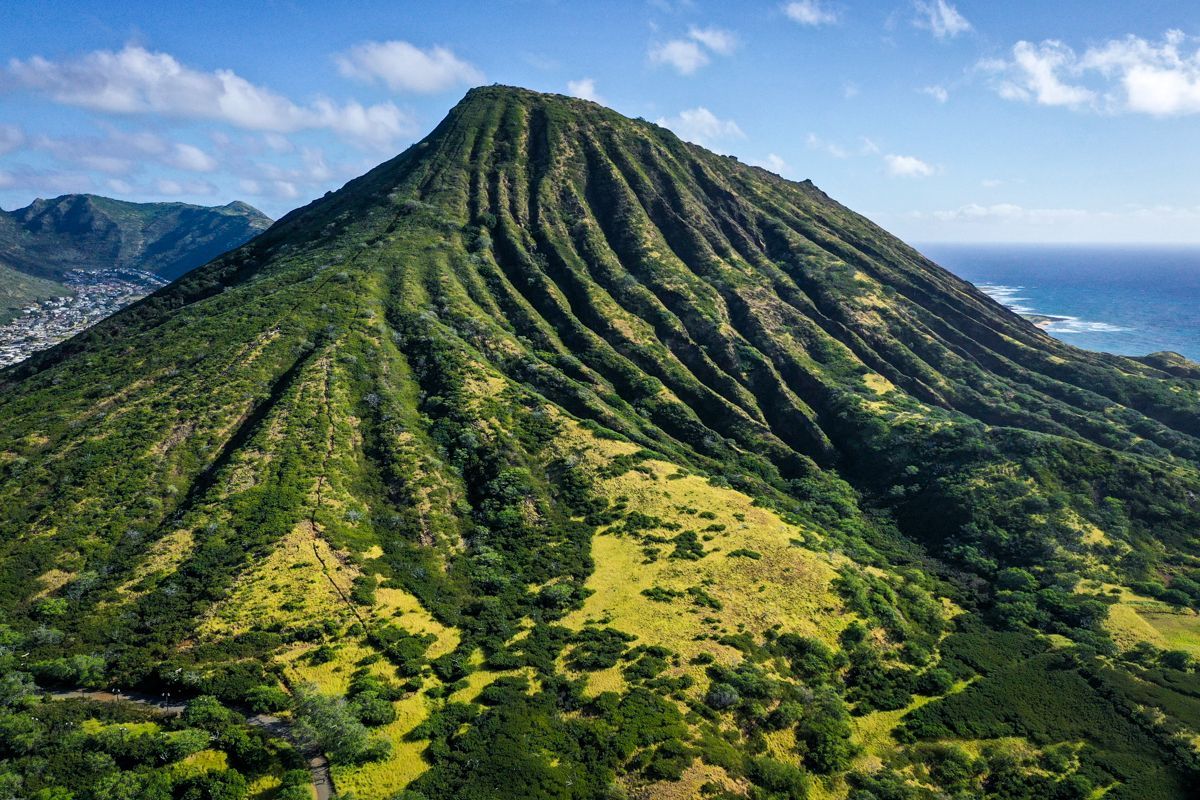
The Battle of Mahoe Kahu part 1
Clouds massed overhead, promising rain as Ienith’s army mustered to march. Hard winds whipped down from the mountains to bring a chill that cut deep the moment the Sun hid among clouds. Only humidity kept the day mild. I watched the last preparations with the awkward sense of a dinner guest whose host refuses help with the dishes. Ienith’s chariot rolled into sight; I approached and mounted to a hundred resentful glares. We started moving, the chariot ahead of the army and the oxen at a patient mosey to match their pace. The herald Kapono rode with us, silent as usual while I traded small talk with the High Speaker.
“He follows you everywhere, at all times?” I asked her.
“Always,” was her reply as the herald lifted his chin with pride.
“Must be hard on the heralds’ wives, children.” I felt strange talking about the man, not with him, but he was a servant and Ienith his patron.
“He has none.”
“Celibate? I heard that about the Speakers—“
“No. Many heralds have raised families in Hoku’e. Kapono is…I only know the words in Kane. Moe ‘aikane, we say.”
“I don’t get that.”
“He prefers men,” Ienith said flatly.
“Oh!” I said with more surprise than I should’ve. “Oh.”
“He has a man in Hoku’e. No keiki, you can imagine.”
“Right.” I pondered a minute. “That’s…okay here? Among the To’means?”
She nodded. “Many Kane. I can’t say all, but it’s long been known there’s no sense in hiding it. You want them taking wives, husbands? It’s a waste. My teachers didn’t like it, so I never learned the English words for it.”
“Your teachers where? Was it a Cult of Luther school?”
The High Speaker looked taken aback that I’d guessed. “Yes. The school in Waimanalo is the only one inside a day’s travel. My makua sent all of us there. I took the lessons better than my brothers.”
“Never had siblings,” I said. “Dad was dead and gone, mom took holy orders and never remarried. That was it.”
“My brother Ke’iwa traps he’e,” she said with a wistful smile. “Akela takes out the boat to fish mahi with the worst parts afterward.” Octopus, and a large oceangoing fish like a tuna.
“Seems a fine trade.”
“Ever since we were young they knew what to do. The older men would say they stole the he’e, but I saw Ke’iwa get them himself. Best fishers in town,” Ienith glowed with pride.
Rain fell in a gentle mist, not the flash showers’ bullets. At a distance I watched the wind push it around like sheets of sheer cloth. Enough sunlight came through cloud gaps to warm us against the rain’s chill. Ienith was happy enough to sing: a tale of an ancient Speaker who drained the sea to water her crops. I couldn’t remember the To’mean heroes Friar Waldman had named and it stung because I wanted to impress her.
The day rolled by without incident, our army moving forward under a steady drizzle. Dirt turned to mud, the Great Road eroded by the armies who’d crossed it before us. The chariot’s wheels sent up thin geysers of muddy spray. In the afternoon, after a brief stop for the oxen to feed and the men to rest, we rolled past a village on the road’s north side: deserted, burned and long since finished smoldering. Corpses lay in the road and in the town, though nearly all were armed men. It had been less a battle than a massacre, and by the brown bluffs in the near east I recognized the village. I’d spied it burning three days before, looking up and down this very valley with Iokepa.
Ienith stopped the chariot and spoke to her herald, who then relayed her wishes in a booming voice. Scouts advanced into the village to flush it for invaders and information though they were unlikely to find either. Fighting men sat and ate in the rain, though some found sheltering trees just off the road. In half an hour the scouts returned, relaying their information directly to the silent High Speaker: no foes nor allies under arms, just frightened people too old or infirm to flee. Keone hadn’t slaughtered them, though he’d have no reason to. Green mountains reached like giant knuckled fingers from the highest Ho’o’auis towards the shore. Noio Koha was visible high up: a large dark blot just below the clouds.
“The invaders didn’t go up the valley,” I observed to Ienith once the scouts departed. “They must have pressed east at speed. Not even bothering with Noio Koha.”
She bit her lip, deep in thought. “Then I was very wrong about his strategy. He must believe Hoku’e is vulnerable now, or he would have covered his back.”
“Or maybe the mountain towns revolted on their own. He wouldn’t need to spare any men.”
“It’s possible. In any case, the cane fields will have burned already. The corn further north may yet be saved.” This matched up roughly with the Friar’s description of the To’mean breadbasket, situated on the rich-soiled southeast plains.
“Who’s commanding the To’mean forces right now? Those we’re following, I mean.”
“High Speaker Kale Maui’kolea,” Ienith sneered, “Surfer of the Screaming Winds.”
“Amazing name. How can I get one?” I tried to lighten her mood.
“You must learn hai’oleo, rise to the best in the art, and etch your name in the God’s memory with great deeds in their voices. It was just twenty-six years from birth to my full name, so it cannot be that hard. Imagine,” she suggested, stifling a giggle, “what you could have done in so many years.”
I ignored the barb. “So he’ll strike Keone from behind.”
“And pin him against Hoku’e’s forces in the north. Too many invaders to skirt around them. Though the ko’e would try if he could and avoid the fight,” she scowled.
“Can we join them before the battle?”
“I don’t know. We’ll try tomorrow morning.”
“We cannot make Mahoe Kahu by dark,” Kapono stated.
“Tomorrow evening, then. We’ll camp when there’s a good spot, one easily defended. Keone might still have scouts in the woods.”
Our march resumed, crawling another few miles over mucky road before Ienith called to make camp beneath those dusty brown bluffs. The rain had stopped. Clouds in the west glowed like hot coals and with the Sun hidden, darkness came early. The High Speaker instructed her men to bed down in a grassy spot off the road, boasting enough trees to anchor the tents and thick enough soil to have absorbed the rainfall. Nobody wanted to sleep in standing water. Troops formed tight circles around small fires made with what little dry lumber could be dug from the surrounding woods. Purple plumerias sent up scented tendrils to slowly supplant the smell of fresh rain.
Ienith’s tent was folded into the baggage. I offered to help Kapono pitch it but found myself shouldered aside by porters. They set the poles, stretched the white fabric and rigged the knots in a fraction of the time I’d have needed. Woven mats went down on the damp earth, her stuffed-sack mattress going afterward along with small oil lamps. I shouldered my satchel and wandered off in search of my own camping spot until I heard my name from behind. The High Speaker stood before me, beautiful with her hair in wet ropes and her soaked dress clinging to her hips. She had her jaw set against chattering but still her arms shivered.
“Where are you going?” she asked.
“A decent campsite. I’d like it soft, doesn’t have to be dry.”
“You’re my guest; I offer you both.”
I looked around, self-conscious. Growing firelight warded off the dusk and dozens of men were watching us. Why was their general so close to this haole? The questions would only mount. I sensed conflict brewing amongst them, a premonition of doom. The immortal is coming, and with him comes a storm. “My Lady,” I began formally for the audience, “That’s very kind and I thank you. But I’ll camp with my brothers in arms.”
Ienith walked right up to my chest, inclined her head and looked up the few inches to my eyes. “These men will be dust before your hair is grey. Their children too,” she whispered, sadness and confusion in her face. “Why do you care what they think? How do they touch you this way?” Her hand was on my chest, gripped the dirty worn fabric of my shirt. Ienith pulled me in and planted one gentle kiss on my lips.
“Get in the tent,” she stated. Loudly, in Kane, for the benefit of all assembled. Murmurs shot through the camp. She backed up a step, heel-turned, and strode away leaving me mortified and dumbstruck. I followed after a moment, slowed by my bad leg, too nervous to hustle catching up.
Kukui oil lit the tent from inside like a paper lantern. Porters had set up her table and laid it with crude clay plates bearing cold pulled pork. I left my boots by the door, Ienith wiped her muddy bare feet on the mats and we sat to eat together like a proper couple.
“Why do you like me?” I asked once we’d spent five minutes stuffing ourselves in silence.
She just stared. “Just being honest!” I exclaimed to catch my own stumble: “You’re beautiful and I’m a scruffy nobody.”
“Nobody,” she softly laughed.
“I know what you said, ‘the immortal is coming.’ But that can’t be it. I don’t think you’d have me here out of curiosity. I could be wrong,” I finished with a shrug.
“Ashur,” Ienith sighed and took a long blink. “I like you simply because I do.”
“But that doesn’t make sense to me!”
“Why does it have to? I could tell you but I won’t. Because you shouldn’t care, if I’m happy and you’re happy.”
“I am happy! It’s just…you’re so pretty you don’t seem real. This place is something I’d make up reading old stories. I’m not used to it. I don’t think I’ve ever seen someplace or somebody so beautiful.”
She stood up then, wiping greasy fingers quickly on the dish’s rough rim and sucking away the remainder. “Are you sure?” I didn’t know how to answer, so I stood to meet her. She touched the straps on her shoulders and with a shrug it all fell away.
The lamps felt suddenly hot and my lungs found themselves paralyzed, deadened with the fear that any movement could shatter everything in the tent like glass. Like we were poised on the edge of a spinning wheel, caught up deciding which way to fall. But she took a step and I wrapped her up in my arms. It seemed she would burn right through my clothes. Strong fingers dissolved my vest strings; we were skin-to-skin when her back hit the mattress.
“I want you,” I said like it needed to be.
“Ku’apu,” was the last word she said.
I woke to the birds outside. Canvas overhead swayed with a breeze I couldn’t feel. Fresh clothes had been laid out sometime during the night: white kapa cut and sewn into a western style in roughly my size, and a long bolt of blue and green cloth that must have been a wrap for the Lady. I dressed and retrieved my vest from where it lay on the mats. My boots were still in good shape, in contrast with the filthy shirt and trousers she’d lobbed in the corner. Ienith had awoken but only just. I pushed through the flap to greet the morning.
It was early still, judging by the light—the Sun low enough for trees to obscure. Sparrows zipped over my head like bullets and every few beats they’d flutter their little brown wings in a course-correcting burst of energy. Along the ground, most of the army still slept. A few porters packed up the baggage train, but the To’means liked to sleep late even on the march. The bed had been lovely rest, but I couldn’t stay settled once the Sun rose. Ienith emerged from the tent—sooner than I’d expected—and sidled up.
“The immortal sees another sunrise.”
“They’re always nice. Those things don’t go away.”
“Then Ashur was born doubly lucky,” she said with a brush of her nose on my cheek.
I put an arm around her waist, swallowing the porters’ stares. This felt warm and right when I could ignore the rest. “You don’t have to talk about it. But I do feel lucky, right now,” kissing her lips.
“I won’t talk about it,” she replied once we parted, “if that upsets you.”
“I’m not upset, it’s just—“
“Inviting the proposition,” she parroted my earlier line, carefully working through each tortuous English consonant.
“Right. Say what you want, I just won’t have much to add.”
“You are a sweet man. But a little boring.” She squeezed me tight and released. “I have work to do. Kapono will be waiting for me and the luna kaua need their hands held. We’ll move in an hour.”
“Of course. I’ll get my things, but I don’t know if you’ll make an hour. Most of these men are still sleeping.
“Cover your ears,” she remarked, and I complied while she stepped towards the slumbering host. “TUM!” came a bellow from her throat: a single bark that boomed through the jungle, quaking leaves and tree limbs in its wake. Three hundred men startled awake at once. The others came up from sleep thick and confused, glassy eyes swiveling in their heads. My ears rang even with the plugs, every sound around me slightly muffled. I understood Kapono’s plight and in the end Ienith was proved right. We marched inside the hour, southeast down the Great Road.
Friar Waldman had sold Mahoe Kahu short. He called it a monument, but in truth it was a small mountain visible for miles—the moment we rounded the last brown bluff and the road turned northeast. A black volcanic dome swelled six hundred feet above the shore, a slice taken out of it directly down the middle as though by a razor. The clear indentation threw me for a loop at first: a simple deed at such a scale it seemed you viewed a painting instead of full-scale reality. To the north the dome joined the larger mountains forming To’mea’s spine—the biggest range on the island, the Kuamo’o. What began as a molten blister on a giant’s knuckle now hulked long-dormant and overrun by voracious tropical plants that hung on Mahoe Kahu like a ragged green coat. The formation’s south slope jutted out into the sea. Huts clustered on the most distant shore: a small fishing village.
“That’s amazing,” I breathed to Ienith.
“We went to see it every year. Ka took us once we could make the hike. Like you say, ipo: there are some things that warm you no matter how often you see them.”
“A Speaker did this. Could you do this?”
“No. All the world’s voices drown under Oleo’lani’s tide.”
I thought of Hoku’e’s founding legend and decided to seem ignorant. “What else did he do?”
“Three great deeds: the pillars of To’mea. One symbol and two structures. There is Mahoe Kahu, the symbol,” she gestured towards the spectacle, careful not to move the reins too quick. “Kia’i Kane and Hoku’e are the others. The first was raised from the sea along with the cliffs it stands on. The latter cut and built in a day from Pele’s living flesh.”
“The fortress didn’t seem terribly old.”
“It was the last. The mountain a hundred years earlier and Hoku’e lifetimes before.”
“And Oleo’lani? Without writing, I don’t suppose you know much about him?”
“Oleo’lani isn’t a man.” Her present-tense wording turned my head. “Three people. Two men. One woman.”
“Heroes from different ages,” I posited, beginning to understand.
“There are deeds so great, they raise mortals to a higher plane of existence. True Speakers for the Gods, their bodies inhabited by Ku’s very essence. So Oleo’lani is an idea, a rebirth inhai’oleo. Not one man…” she paused before correcting herself: “Or one woman. She was the first.”
“A woman built Hoku’e.”
“Of course,” she smirked. “Would a woman cut a puka in a mountain? Would a woman raise a fortress on a mountainside, miles from anything truly worth defending? No. A woman, given Ku’s true breath, would build something good. Useful.”
“Why only one? Somebody so strong could do it many such things, right?”
She shook her head. “No, friend Ashur. Gods don’t walk with us for long. They fell, all three, at the thresholds of their miracles. Ku will never abide a living god. His strength destroys mortal flesh like a candle melts wax.”
“Jesus,” I said in shock.
“Him too.”