Speaker for the Gods, week 18
Flight to Waimanalo
The dogs caught up ten minutes later, nearly a mile on near the ridge’s crest where the forest broke into a grassy clearing. A ruin sat in its center: an old two-story structure long since swallowed by ivy and moss, just a skeleton of a building with empty wall frames and no ceiling. Supporting columns had split open to expose their steel marrow, corroded almost to dust. A smaller shed once stood adjacent but had fallen to an overgrown heap. The whole thing had been built on a square concrete cap fifty yards across, cracked and pierced by a few ambitious weeds. Despite the ages passed, the foundation stayed solid enough to keep new trees from springing up. They really knew how to build in those days. Cold winds swept over the exposed area—a hot, bright day on To’mea’s south shore grew darker as clouds invaded from her windward side.
Once a fence bordered the structure but the links were long gone, the metal posts disintegrating red husks. Enormous metal pipes rose from the ground, worked themselves into loops and passed through the building’s heart before plunging back into the concrete foundation. An old groundwater pumping station; a decent spot to make our stand. We entered the station’s bottom floor doubled over, breathing hard to refill our lungs after the run. The gutted interior yawned wide open though enough concrete obstructions remained to serve as cover. Barks came loud and furious from the jungle; they’d be on us in a moment with their masters close behind. Staves drew his weapons and inspected them like a sergeant over fresh recruits, eager to suss out the smallest fault. Kapono wielded two black-glass knives—his spear now blasted to atoms—and Ienith stood with her arms crossed, unarmed. I offered her my knife, planning to use the machete myself, but she refused, squeezed my hand and bid me “Be safe” before retreating up a flight of filthy stairs to the station’s second level. I assumed she had a plan; the Lady was demonstrably able to protect herself.
Dogs appeared at the clearing’s edge, tawny replicas of the friendly beasts from Kaleikaumaka. They howled for their masters and pawed at the grass. At least Kane hounds were small—none of these cracked fifty pounds. They stayed just at the tree line until finally their masters slid out from the shady woods. Brown men, bare chests streaked with white, carrying an assortment of traditional Kane weapons.
“Eight men, five dogs” Staves announced like we couldn’t count.
“Two bows,” I noted. “That’s actually good. We’ve got cover here, and if they stay back that’s less to overrun us in the melee.”
Keone’s men spoke amongst themselves, feeling time on their side. With the hillside falling away from the building on three sides and offering no cover, they’d see us wherever we ran. We were silent—three men had little use for strategy, even if all three could hear. We kept things simple: defend the stairs and be prepared to retreat upward if things went badly. The second story was low enough to jump off, so they couldn’t tree us. Staves swung the rapiers fluidly, with an easy grip. Kapono held one knife face-down in his right hand, the other face-up in his left. I set down my satchel in the corner for later. We huddled behind a waist-high cement barrier, peeking over it and waiting. Keone’s men approached in a six-wide spread formation, the ilio stalking around their heels and two bowmen walking slowly behind. My heart pounded with fear—on the beach at least, I’d been able to hide behind others. The last such test, the boar in the forest, hadn’t gone well for me.
The archers loosed two arrows into the dirt in front of our barrier, and at a word the dogs sprinted in. Staves scuttled to the edge of our shelter and took a kneeling position with swords out. I gripped my machete with both hands and lifted it high to cover the other edge. Kapono stayed low in the middle, unable to hear the dogs but ready to move either way. A second pair of arrows whizzed five feet overhead to clatter off downrange.
They reached the Colonel first and he moved an instant early, lunging out from cover and stabbing with his right blade. He stuck the first dog, a yellow bitch, through her chest and out her abdomen. She thrashed like a hooked fish and let out a yelp but he’d already pulled back to cover, striking and retreating in one fluid motion. The dog fell in a heap as another leapt around the corner snarling and snapping, undisturbed by his sister’s death throes. Staves twisted like a snake, swatted its muzzle of the way with the flat of his left blade and put the right through its throat. I brought my machete down on the first animal to round my corner, sinking the blade deep into its spine and about six inches straight down. Spray hit me in the eye. An awful scream let loose—the kind of bloodcurdling noise that comes from a poorly-killed stew rabbit—and I had to jerk my blade free of the staggering mess to lay down a deathblow.
A second dog launched itself airborne over its fallen brother, teeth bared, eyes black with battle frenzy. I spun out of the way, swiping at air with one hand and my bloodied eye with the other. Kapono took its charge in the chest. He tried to push its muzzle away with one hand; couldn’t get a grip through the foam and slobber and fell to the floor with the beast on top of him. I went to help, but he got it in the flank with his left-hand knife. With a whine the dog dismounted, scratching Kapono’s face and chest with its claws. It went for Staves, who was laying his third foe to rest. I tried to call out a warning but was too late; the cur sunk its teeth into his calf. Howling like a hound himself, the Colonel spun and lashed out with both swords. He caught the dog’s gnashing muzzle, slicing off its lower jaw and most of its tongue, leaving it to stand there a moment maimed and astonished before twin spars of steel slammed through its ribs.
“Every fucking time!” bellowed Staves, grimacing at his wound but unwilling to lower a weapon to cradle it.
“Behind!” warned the herald Kapono. I nearly died in the moment my brain took to interpret his Kane. I cast myself hard to the deck as something whizzed overhead and shoulder-rolled rolled onto my feet to see a furious man recovering from a hard swing of his club: a three-foot oaken bat wrapped up with twine and crested with a pair of massive cowries, each bigger than a fist. Their speckled outer shells had long since ground off long before, exposing pitted purple mantles. One good blow would paste my brains on the wall. Other Kane carefully advanced, calling out challenges, standing back just out of their comrades’ swings. Kapono, Staves and I stood in a loose triangle facing outwards towards six foes who’d expected more from their dogs. The other two were sending arrows into the second story. Ienith was singing above us, after a fashion: lilting notes that were not Kane and crackled with electricity along the contours of their hardest consonants. I heard hai’oleo but felt nothing unnatural, couldn’t see what precisely she wrought in the landscape.
“Tigers!” Staves screamed, drawing out the second half. Keone’s men paused for a moment, unsure what the English meant. “Tigerrrrrsss!” it came again at the top of lungs hoarse with rage, and the Colonel rushed his foes. I ran with Kapono at his back.
Clubs are poor defensive weapons. Without a flat plane to re-direct blows or the strength of a forearm behind a shield, you’re reduced to taking hits directly on the haft. Often it breaks, but even if it holds you’re knocked off balance. No balance, no counterattack. So I made sure to get the first swing, twisting my hips and back, throwing everything into it. The man with the cowry club blocked, but the strength in his wrists wasn’t enough and the weapon bounced back into his chest missing a wedge of wood. Thicker than I, but not too big for a Kane, he staggered as I took another step and cleaved back across at his midsection. He was quicker than I’d expected, bringing the weapon up to shield the second blow, but placed his right hand wrong. The machete went right through and cleaved off its top half, four inches below the wrist. I saw a spray of blood and suddenly only his thumb remained to grip the wood handle—his fingers gone, the other bones cut cleanly through.
He dropped the club and staggered back without a sound, gaping at the wound like it happened in a dream. A second man rushed with a crude axe: a ten-inch tooth, a heavy ivory spike from some titanic seabeast twined to a haft of common wood. I jumped back to dodge the first swing and brought the machete up with my right forearm bracing its steel spine, my own hands protected. The machete’s flat side arrested his second swing, caught the axe haft and stopped the tooth short of my face.
With a quick move I slid my blade up to hook the axe from underneath. From there I twisted around and down to try and disarm the man. Seeing my gambit he threw his shoulder into my chest, driving us both backwards into the concrete wall. His closest comrade brandished a spear just behind, searching for a spot to stick me. With my hands pinned in a mass of sweaty skin and weapons, he wouldn’t have to wait long. It was Kapono who saved me, streaked with blood that could have belonged to several people. He tackled the spearman, getting in too close for the point to work and stabbing at his foe’s belly. They fell away from my view and to the ground. Metal rang out from Staves’ direction. The foe against my chest tried to twist his axe loose but didn’t have the space. He knocked me against the wall with his shoulder and I held firm, but couldn’t take the larger man’s battering for long. I suddenly saw a solution that would’ve occurred sooner to a better fighter. Rearing back, I rushed forward again to plant my forehead right in his nose.
I heard a wet crack and saw a burst of stars. Sound dissolved for a moment, fusing with light into a wave of confusion Accompanied by splitting pain in my head and hot liquid on my face. I forced my eyes open and felt the sting of salt. My hands were free. My opponent had dropped his axe and now clutched at a bloody mass on his face. His eyes flicked to mine and widened as thought overrode instinct and he realized what was coming. I raised my machete, the moment seeming to take a long while, and slashed brutally downward. A stronger man might have taken his head off, but instead I cut through the neck and lodged my blade in the spine. A gout of blood burst from the wound. I jerked the weapon loose, horrified as he fell to his knees. The axe sat just inches from his right hand. He looked down at it, grimacing, willing the limb to work though the nerves had been severed. I turned away spitting blood and copious drool. My stomach pitched like a ship in a storm.
Nobody else came; none still stood. Kapono got off the ground, his enemy a shredded and gurgling ruin. The one-handed man had fled. Staves sat on the floor beside three crumpled bodies and only small pools of blood, holding his wounded leg. There came a roaring in my ears, elemental and unwavering even as I grew more lucid. Hai’oleo. Chill winds dug at my face to crust the smeared blood. Everything around me seemed grey and cold and blurry. Keone’s bowmen dropped their weapons to sprint towards the clearing’s edge.
Ienith’s mantra propelled leaves and tree branches through the sky. Her voice moved beyond hearing to merge with the atmosphere. Her words had form but no meaning except to the clouds, which roiled and contorted like prisoners under torture. Titans took new shapes overhead, all propelled north-by-northeast in a long steam by a savage shear high in the sky. Just minutes ago they’d ran the other way. The High Speaker overwrote the wind.
I went upstairs, keeping a hand on the wall to support myself in the squall. Arrows both broken and intact littered the second floor. No walls stood at this level. Ienith stood with arms outstretched, dress and hair whipping in the wind, eyes rolled back and fingers kneading invisible clay. Hai’oleo boomed out into the world but her lips didn’t quite match the sounds. The words built in her throat and exploded, shaped only at the end by her lips and tongue like a sculptor lathing down a last tiny flaw. Though softer than the spells I’d heard, at this range they nearly deafened. Each syllable cudgeled my eardrums. As she’d said, those not built for hai’oleo find their bodies taxed by it.
Finally she stopped, luminous black eyes centering in their sockets. She peered at her handiwork in the sky and seemed satisfied. Ringing continued in my ears; the fog in my head coalesced towards a pounding headache. Ienith put hands on my shoulders, looking me up and down with concern on her face.
“There’s so much blood.”
“I don’t think it’s mine. Maybe a little.”
“You’re not hurt, then.”
“Just a knock on the head. The others are fine, too. Scrapes and bruises.”
“So little? That’s no small feat. The Colonel was wrong.”
I giggled despite myself. “A dog bit him after all, so I doubt he’ll apologize. Kapono was great even with that arrow in him.”
“My Kapono is a great man.”
“I mean it. I’d be crying every time I moved that arm. He doesn’t seem to notice.”
“A great man,” she repeated with a nod. “But you sold yourself short, to have made it through cleanly.”
“Oh, I’m still the worst of us all and it’s not close. Just wasted time wrestling while they took the others.”
“Did you kill any?”
“One,” I shuddered thinking of his end. “I hurt a second and he ran.”
“So you did your part. Take some pride in that. And stop telling me how awful you are or someday I’ll start believing you.” Ienith put her arm around my waist and kissed a clean spot on my neck as we turned to the north. I could see the farmland on the ridge’s far side, down the slopes and over the river she’d mentioned. Beyond the water lay a huge blackened expanse of cultivated land, still hot and smoking from a recent burn. These were the cane fields, set alight just after harvest. This harvest came early as farmers retreated before Keone’s army—presumably back behind Hoku’e’s walls. Beyond the burned cane twinkled rows of verdant green cornstalks, still intact. It was late spring and they’d yield nothing for months yet, so there was little point in anyone controlling them. Whomever won the war would have to rule its aftermath and even Keone had no use for famine. In the sky, Ienith’s exquisitely-crafted clouds kept sailing away.
“That’s the direction of Hoku’e,” I said, challenging the High Speaker to respond.
“A message, sent the only way I could.”
“I thought there was no written Kane.”
“There’s not. But there are augurs, glyphs, symbols Ku’s Speakers may read. In the sky, the earth, the sea, in open flame.”
“What do they say?”
She breathed deep and sighed, swallowing hard truths. “That Keone wields hai’oleo against us. That Hoku’e no longer enjoys the heavens’ sole favor.”
“You think the gods want new rulers on To’mea.”
“We cannot know Ku’s will. But neither can I help seeing the events before me.”
“But you can’t know Keone wrecked Mahoe Kahu! Where’s the evidence for that? He was miles away with his army! It probably wasn’t his voice in the ground. Maybe he turned a Speaker, or found one elsewhere and trained him? That’s the simplest answer.”
She stared flatly at my monologue, merely tolerating it. “You ask the wrong questions. Answer this, wise old man: how does one man rise so far as Keone? To rule one island, then another, then another? To bring men from those places—men you yourself conquered, whose ohana you yourself killed—to fight for you? To take Hunakai Harbor from Lopaka Io’aulani, Song of the Sea? How does one do these things, Ashur? Tell me the simplest answer to that.”
I didn’t need to say it; just nodded, chastened, feeling tremendously stupid. “You’re right. It’s probably him. Even if it’s not, we face the same obstacles. So what now?”
“Now? South.”
“Going back? But we just—“
“The men who fled will tell them where we are and what direction we ran when they caught us. So we retrace our steps to fool them. I’d have taken us south from the moment we left the cart, but Kapono did his best. We’ll only meet more foes to the north.”
“We’re not hooking back up with High Speaker Kale.”
“Keone’s voice came from the north. Kale Maui’kolea may still be in the field but Keone will know and will never let us reach him. His hai’oleo is very strong. I felt it earlier, moving down through the stones like a wave of plague. We are closer to defeat than the Mouth of Ku knows.”
“You’re the best. You can stop it.” Motivation was all I had to offer.
“I feel...” she paused. “Depleted. I will go to a source of strength, and the nearest is south.” She drew close and kissed me. “We’re going to Waimanalo. To my home. We might not make it by dark, but I know the way. Just head downhill and follow the beach.”
Kapono and Staves had collected themselves downstairs and raided my satchel. They’d taken bandages to bind the latter’s leg wound and eaten what food remained from Auntie Hina. Ienith went out into the clearing to pick up an abandoned bow. I helped her collect arrows from around the building—those that weren’t broken.
“How’d you avoid all these if you were singing?”
“It’s not singing. But it’s not hard with the wind.” She pawed at the air like swatting a fly. “And they were terrible, besides.” Ienith put her arm under the bowstring, tucked the weapon around the back of her shoulder and slid the best half-dozen arrows into a deep pocket on her dress. Their flights swayed seductively on her hip as she walked. Staves and Kapono sat silently as she explained our new southward course, but they seemed to agree.
We moved downhill through the jungle. Staves grumbled about nothing in particular while Kapono trudged weakly behind us. Adrenaline had pushed him through a great deal, but it was running out and he needed rest. We gave him a breather at the gully, where I finally tanked up on “polluted” stream water. It tasted fine to me and we all drank greedily, without complaint.
Ienith’s chariot hadn’t been moved. Most of the oxen were dead, the rest missing. Bodies still lay in the road near Mahoe Kahu’s ruin and Keone’s men had gone. The forest on the road’s southern edge swiftly grew short as the soil got sandy and salty. White bird-of-paradise flowers stood out from their orange fellows beside the rough path Ienith had found.
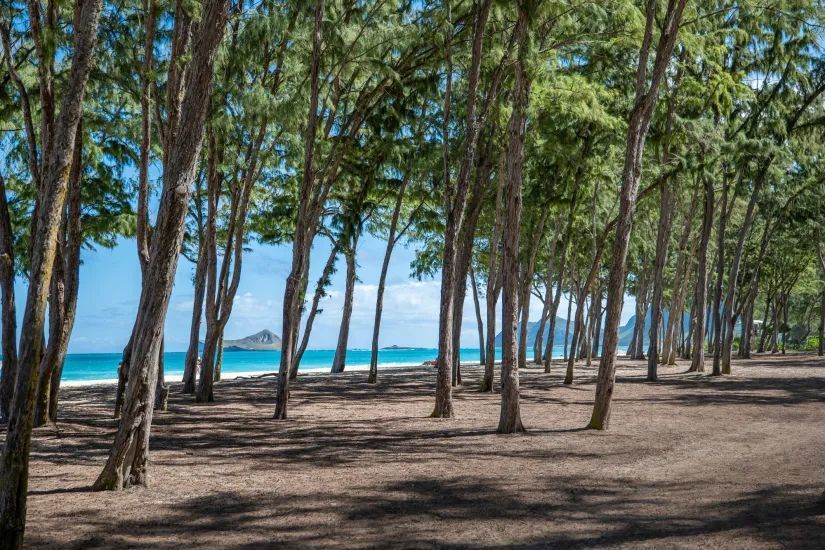
This trail ended at a low rocky cliff along the water. Its sheer face only dropped five feet into a shallow lagoon with a sandy bottom. Gentle waves sucked noisily at the wall; beneath the surface, sea grasses swayed like corpses’ hair on a shallow sandy plain. Above us, trade winds blew purple clouds back out to sea. The sky turned that magnificent incendiary orange I’d forevermore link with To’mean sunsets. Ienith took us along the cliff, picking her way over sawflowers with purple buds. Kapono tripped and fell on their roots, concealed beneath thick waxy leaves, and needed our help to stand again. He had so little left, Ienith and I each took an arm over our shoulders to carry him along. His ribs convulsed and a growl of pain escaped though he struggled to contain it.
The ocean took to its evening meal, turtles poking their snouts above the lagoon for bubbling breaths as screaming seabirds flew gyres overhead. Every so often a white-grey missile plunged from the air into the sea, submerging only to bob on the surface like fishing floats a moment later. Past the lagoon’s mouth, an albatross cruised low in a kind of stasis. No flaps from his wings, just twitches of tail feathers and tiny corrections in the spine. He flew without effort or care, proudly displaying six feet of wingspan and a long hooked beak. The sea, reflecting the sunset, was an endless river of gold for the panning.
“Your friend ku’apu,” Ienith said, pointing with her free hand at the giant bird. “Alone, as he likes it.”
“They’ve got to have mates,” I ventured. “Or there’d be no baby birds.”
“Once in a long time. They meet, there’s an egg, and they leave before the piopio even fly. Then nothing, for years. Just sea after sea, open fields without a fence in sight.”
The coast turned north for a spell before resuming its eastward path, tracing an elbow in the coast approaching the village of Waimanalo. The full moon cast its oblong glare like a vast white ship on a bay with low slow waves. Bonfires shone and music sailed over the water: drums and singing and a hint of woodwinds too high to cross the gap.
“They know you’re coming,” I said to Ienith.
“My clouds were in the northern sky. Speaker Makapu will know them.”
“Will Keone?”
“It is possible. To unseat me from the site of my birth would take an army.”
“He’s got one.”
“And if he would like to spare Hoku’e by dashing it against Waimanalo’s rocks, he’s welcome.”
“They’d better have food waiting when we get there,” Staves groused, limping behind us. “I want another fuckin’ dog to shank. Fleabitten mongrels.” He cut loose with a rant condemning all things canine. It wasn’t very funny, so you’ll forgive me skipping over it. We labored along the rocky coast through a building tide of music. I couldn’t remember my last real welcome to anywhere and felt a deep chord in my chest in the empty warren where the idea Home might’ve been. Fluid pooled in Ienith’s eyes, soaking up fire from across the lagoon, and for a shameful instant I hated her for having what I didn’t.