Speaker for the Gods, week one
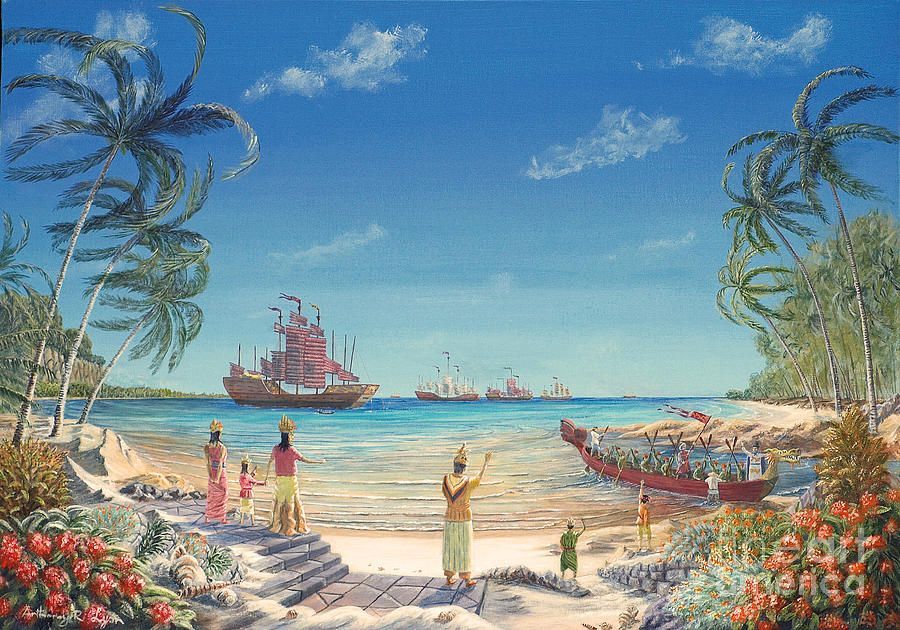
Chapter One: Debarking
“There’s a new wrinkle,” Piero explained as I lowered myself to the red satin chair.
“What’s that mean?”
“War in the islands.”
“There are so many. Someone’s always at war.”
“This is more. A major re-alignment. They say To’mea may fall.”
“This your investors talking? Or are you changing your mind?”
“I thought you might change yours.”
“Sweet of you. I’ll be fine.” The room was high-ceilinged and Piero kept the blinds open to let in the Pacific breeze. He wore a wrap of silk, a blanket over his legs and the stripes of afternoon sun lent his papery skin a hue almost lifelike.
“Not everyone finds you as charming as I do. Go well armed.”
“No quicker way to convince bystanders you’re eager to fight. Somebody’s paying through the nose for this, though. It’s a big investment for such shaky prospects. For a relic, even if it were really there.”
“The facility is on To’mea, we know. The ship is there, we think. The contents, who can say?”
“I’m getting paid regardless? Less the bonus, of course.”
“We’ve been over this.”
“I wanted to hear it again. You’ve only got these dusty books for me? It’s like going in blind.”
“No white man’s written an account for a hundred years. You can change your mind, Ashur.”
“Morning tide, I’m gone. And you can start fussing over someone else.”
“Then I’ll wish you the finest hunting. The islands are beautiful, particularly in Spring. I’d have come along, were I younger.”
Piero extended his hand to shake, old bones fragile like a bird’s. He was barely shaving when we first met. I took it gingerly and smiled. “Don’t we all wish we were younger?”
***
Ashkandi plowed westward, her alabaster sails stretched like pregnant bellies. When wind came hard over the prow, sailors scuttled up the twin masts to raise fresh linen webs and tear others down. The Captain said we made great time and there was nothing in the endless sunlit expanse to contradict him.
Below decks were rows of tiny compartments, cool and dank whatever the weather. My cabin nestled against the beast’s oaken ribs like some lesser organ—the bulkhead leaning down with the hull’s curve, the ceiling so low I couldn’t stand upright. On the twelfth night, we suffered a storm: pitching masts, waves scouring the decks, timbers creaking all around while thunder pealed like summer on the plains. The crew shouted to each other while passengers vomited and prayed in equal measure.
On the morning of the twentieth day, I heard the shout for land. Seabirds had scouted us for half a week already, albatrosses riding the swells. Everyone rushed above decks, pushing past an officer imploring us to stay below. We huddled to the deckrail and looked out across blue glass. To’mea reared from the sea, an easterly link in a long chain of islands all populated by the Kane people. Sunlight turned the shoreline trees a vibrant green. Miles beyond, steeply eroded mountains kept vigil over the flattened world. They cracked the sky and draped damp grey shawls about their shoulders.
We approached along the island’s east coast and rounded its southeast corner, treated all the while to magnificent views of Mauna ‘Ele. A shield-shaped mountain forming most of To’mea’s eastern half, it stretched from sea cliffs up and up until black tresses vanished beneath a chapeau of white clouds. Its high gaze ruled the rest of the island, the grassy plains and sandy shores and stream-gouged valleys. The great volcano was quiet then and had apparently been for centuries. The Kane were a people generous with their affections and gifted at war, their gods capricious and violent. On To’mea, the legendary Speakers were said to manifest those gods’ will in the corporeal world. I’d no idea what to think about that.
Passengers went below to collect their belongings. Merchants tipped sailors to lug their trunks from holds to deck. Two missionaries traveled with a blind monk. A family huddled in the steerage, small and pale, speaking a guttural language to each other. Professional swords had come in for the war: friendly folks who took only their work seriously. Our wandering paths made fellowship easy and sharp; distilled wine made it effortless. We’d spent most of the long slow nights below decks together, swapping stories, eating bricks of petrous bread and pork so salty it stuck to your tongue. They were particularly taken with my tales of riflery, firearms having long since rusted into extinction outside a few vaults and rich men’s collections.
Imminent landfall triggered chaos in the corridors, swiftly clogged with bodies and baggage. The merchants were close to fighting and so I sat on the bunk between my duffels waiting for the clamor to subside. One bag was clothes and tools while the other I kept near empty. Its loose clunking form held my sheathed sword and Piero’s books, the first handbound in leather with rough scalloped pages. The God-Speakers of To’mea had been penned some hundred years before by a friar of some Christian sect. I’d struggled through the early chapters: dry stuff, little more than lists of fish and birds and plants. Finally it turned to a digressing story of the Friar’s travels across To’mea and his encounters with the titular Speakers, with a final daring excursion into their forbidden capitol. It passed the time on a long voyage, but I figured the text would be little help ashore. The peaceful island it described was now sundered by war and every To’mean he described was long dead.
The other book was dry dog-eared paper, its orange cover pale and faded. PROPERTY UNITED STATES NAVY stood embossed on the cover; inside it held little but diagrams marked with gibberish. It seemed truly useless where the Friar’s account was scattershot. It described things I’d no context to understand—advanced machines, complex procedures, all of them no doubt ruined and corroded by time and salt water.
The cutlass came out from the bag, curved and thick like a cleaver. I buckled it to the front of my right hip in the reigning fashion and pulled a sour old shirt from my first duffel. That went into the second, packed around my books to protect them from rain. The rest of the space I kept empty—reserved for the treasure I wouldn’t leave the island without. A treasure waiting somewhere in an old ship, that ship hiding somewhere on To’mea. Whether whole or wrecked, the craft was so old it predated the Calamity. It’s usually senseless to run after such things, but Piero never staked his reputation on ghosts or myths. His vouch was good enough for me—and besides, how well could one really hide a big metal ship on an island?
Ashkandi pulled into a wide harbor ringed by heaps of red stone. An old flow of lava sprawled uphill like the remains of a fallen giant. The Kane used many words for their mountains’ molten spew, the way men of other climes can call snow or rain a dozen things. Terms like a’a described the sense of walking barefoot over black igneous knives. Every year saw new plumes of smoke somewhere amongst the Kane islands, bringing with them fresh squalls of cinders. Where I grew up the ground could shake and rip itself to pieces; fires ate up whole forests; crops dissolved in swarms of ravenous bugs. But never did the planet spill its own burning guts out a mountainside.
The piers were built from the native stone: thousand-pound boulders fitted together with exquisite tightness, their seams free of mortar and the stones unmarked by chisel or lathe. Tiny white crabs ran frantic patrols between the water and the brine-crusted tide line. Three monstrous platforms ran from the shore out into the water, all a-bustle with shirtless Kane. Wooden ramps ran down to floating wooden platforms, lashed to thick pitch-smeared pylons but left otherwise free to move with the tides. Small outriggered canoes crowded the first two piers, their sails white but splashed with red paint, lying folded under single masts. Dozens of wooden arms reached out into shallow emerald water. Men shuttled heavy parcels down the pier in lines, stuffing them in the boats’ dugout bellies. To’mea mobilized for war.
Ashkandi coasted into the last pier. Her hull rumbled seismically against the pilings; the workers on the dock bent their knees to soak up the bump and then stood straight to go about their business. Ours was the only foreign vessel. Planks went down immediately and Kane vowels were bellowed between ship and shore. I paced on the deck while the largest items wobbled down to the pier. For all the commotion over landfall, many passengers had stayed below to travel onward, into the distant West. I debarked just behind the mercenaries on board; they pulled at their collars and grumbled over the heat. It was moist and suffocating, hanging miasmic over the harbor, relieved by unpredictable breaths from the trade winds.
My knees swooned at the touch of dry land on my boot soles. Thighs went next, turned suddenly to twitching rubber as I set my bags down and lowered my rear to the pier. I watched from a seat, stretching my legs like a baby, as one of my new companions fell flat on his face. He was up quickly, scrambling and swaying and summoning his pride to refuse the ground no matter how it called him. From the docks a broad road of dry packed dirt led up to a small town. Thatched huts stood in front of a pair of decayed pre-Calamity bunkers: the carcasses of ancient grey pachyderms half-consumed by vegetation. Metal doors had long since rusted off their hinges. Rough brown drapes blocked the doorways and womens’ chatter wafted out. Behind and to the sides stood more houses, mud and light timber with grass roofs. Children cavorted in a grassy common, watched by an old woman sitting on a stone, her hands folded in the bright orange cloth of her waistwrap. Along the water to the harbor’s east waited wide stone-rimmed pools carpeted with algae. Men stood waist-deep in the green scum throwing out fishnets.
I approached the guarded gate along with the mercenaries, who did their best to adopt a martial swagger though their legs still swayed. I stuck close to the group, hoping to profit by their bravado. The guards held us at the gate, putting out their palms and pulling their black glass-tipped spears up a little straighter. Tattoos traced houndstooth patterns on arms and necks cured by the Sun.
“You canna come troo,” said the man on the left.
“We’re paid to be here!” insisted the youngest mercenary.
The big guard shook his head. “Somebuddy show ta take you, ya. Nobuddy come, you sit heeah till da boat leaf an’ you leaf widdit.” His English accented but comfortable. The mercenaries set to whispering amongst themselves, and so I set down my duffels. Nobody comes so far to turn around. We waited in deepening pools of sweat while the merchants met their To’mean agents and moved easily through this impasse.
A white man came from behind the gate, stepping deftly between the glowering guards and a cart of crude iron cookware. Thin, dressed in a smart red jacket and grey pants, face ruddy with sun, his eyes two chips of lucid sapphire. Salt-and-pepper hair was cropped close; a thin grey mustache and smooth razor-flushed cheeks. Rapiers hung from each hip, hilts polished to a shine, sheathed tips gyrating with his gait. The mercenaries pulled up and straightened their backs. I tried to blend in and escape scrutiny.
“Are you the group came over on the Ashkandi? Gordon’s men?” He spoke beautifully fluid English with an R-flattening accent I’d heard from the East, across two seas and a continent. Chips of glittering blue worked rapidly between our faces.
“We hired on with Captain Gordon’s agents in the port of Coronado, sir,” responded the senior sellsword.
“Well, if you can dig your pay out of his grave, I’ll point to you it. Shallow, for what it’s worth! The coin comes from me now, gentlemen. Real coin, not the fucking seashells these people use.”
They looked back and forth, surprised but not dismayed. There wasn’t so much a discussion as a collective shrug. They were agreed in a moment. “What’ll we call you, sir?”
“Colonel Staves, of the Royal Red Tigers. We’re quartered at a camp six miles on,” he gestured up the north road. Now he turned back to us. “Gordon’s letters named four men. You’re five.” Everyone turned to look at me, and suddenly I had his undivided attention.
“I’m not properly a soldier, sir,” I said with a wince.
“Then you must be a proper fuckwit, since you’re standing here with soldiers.” He cocked his head like it was a question. I began to concoct a lie, but he cut me off. “You wear a sword and stand like you can use it, so what’s your game? I need fighting men can speak the King’s tongue and don’t bugger each other.”
It was a better chance than any fib I’d have concocted on the spot. “Yes, sir. I’ve had some time soldiering.” State armies were hard to desert but mercenaries were another matter. An absent man is one you don’t have to pay.
“You’ve signed no contract?” asked Staves.
“No, sir.” I sensed prattling on would only make him like me less.
He laughed, reedy like the rest of him. “Well enough, though I won’t pay the same without a contract. I suspect,” he paused, giving a long look back at the gate guards, “you’ll be amenable.”
“Absolutely, sir.” I nodded and gamely straightened my spine.
“You got fruit? Seeds?” asked one of the guards, re-asserting To’mean power since the Colonel seemed to ignore it.
We fresh arrivals were confused by the question. “Does he want a bribe?” I muttered to Staves.
“They don’t allow any foreign creatures here. No animals, no plants, nothing but those they raise themselves. Sanctity of the land and all that rubbish. Give ‘em one thing, though: no wailing piss-soaked cats on this whole island.” Speaking to the guards in Kane, he convinced them to settle back scowling without a search.
“And we’re off!” Colonel Staves twirled a wrist in the air and started walking back through the gate. The guards moved to admit us.
“Wanderer,” he called, glancing quickly over his shoulder, “I’ve got their names. What’s yours?”
“Ashur.”
“Ashur.” He kept his eyes ahead. “I’m sure we’ll get on famously.”
A well-worn foot path led inland from the harbor village, north through barren and dusty lands. Lava plains rolled away to every side, brown and desolate, strewn with hundred-pound stones like some giant had sneezed them. Smaller rocks had been piled into knee-high cairns spaced at respectful distances. Lumps of bleached white coral lay in lacy circles bordering the largest heaps, marking them for the gods looked down. To the west hunched a single mountain: an old volcano, a lopsided cone whose base broadened out to tree-lined coasts. Mau Pu’eo had built To’mea’s western “foot” in the distant past. It had been dead long enough for even the dry slopes to grow thick with stout gray-barked trees. Across the plain to the east were similarly forested hills that climbed over each other to reach the higher, wetter Ho’o’aui mountain range—jagged green jungle peaks towering over the island’s leeward side.
The noon Sun beat on our heads; dark lava baked in the heat and seemed to breathe fire back up at us. Stove-hot grit burned my feet through a good pair of boots. Our only relief was the wind, breathing cool and briny from the ocean, funneling through the wide valley between mountains. Sediment rose from the ground, spinning and building into hot-tempered little cyclones that careened like rowdy drunks over the desert.
I grew groggy in the shimmering heat, so slowly it took my first stumble to notice the change. When shaking the fog out of my head didn’t work, I took to watching the little wind devils. They’d rise from the earth, gather steam and lose it again—distracted by cross breezes and the greedy call of so much open space. In ten or fifteen counts, every plume sunk back to the dirt. But one didn’t. It grew like the others and instead of rolling to its doom took on a spark of life. Dust rose and fell, turning back and forth until the little storm seemed to dance. A second cyclone came in, corralled from distance by an invisible hand. It bounced to the same silent beat, orbiting its partner, the pair of them tearing across the plain like squabbling squirrels. Finally they slowed and came to rest, hovering in place, defying the breeze to frame a human figure standing in a cloud of red dirt. I pulled one hand away from my duffel straps to point. I opened my mouth but couldn’t think what to say.
A young girl stood atop a coral-ringed cairn of rough black stones. She wore a simple grass skirt, its fraying brown ends a few inches above her knees and dirty feet. Chest bare and flat as a boy’s. A wreath of waxy sawflower leaves crowned her head, bare feet perched akimbo on the rocks. Her hands stretched out with palms down, elbows locked, fingers rhapsodizing on invisible instruments. Enormous black eyes focused on the dancing cyclones. Her mouth worked quickly, but I heard nothing even on that silent plain.
As we approached, Staves whistled for attention. The girl’s head snapped around; the cyclones burst into oblivion like someone sneezed. She took us in, vexed but curious, far fiercer than a girl should look facing armed men. Her face pinched, one eyebrow raised. Thick black hair trailed back over her shoulders. Beautiful the way children are beautiful, with eyes that reached in you and drew back again having taken something for themselves.
Staves declined his head to speak softly in Kane. The girl replied. He nodded once and spoke again. The little girl smirked and put a hand on her hip. Staves looked back at us. His neck twitched to one side. Move.We obeyed, real fear gestating in the mercenaries’ eyes. It didn’t take a rare brain to deduce what we’d seen: a To’mean Speaker in the flesh, for all her youth still brimming with strength and the confidence to use it.
The path turned northwest soon after and the girl went back to her game. Fresh eddies spawned in the hot empty space. The Ho’o’auis came into focus, deep ravines cut in their slopes by eons of running water. For all that moisture, its long course down the mountains ruined the stuff. Toxins in the ground, the friar declared from the pages of Piero’s book, the kind that rushed through the guts and sapped the body of strength. An insidious curse left behind since the Calamity. You couldn’t drink it, though plants animals seemed not to suffer. Folks in the lowlands were left to buy their daily drink off merchants from the mountains.
Blue skies showed chaotic dregs of clouds pulled apart by high-up winds. We came within three hours to the mercenaries’ camp. It stood just past a small village, where Kane tended pigs and goats by a stream’s slow elbow. Homes of dry grey sticks cast warped shadows in falling afternoon Sun. Yellow dogs with fishhook tails ran yipping circles around children who laughed and waved at them with switches. The To’means who looked our way, seeing our steel weapons, gave glares of reproach. Staves ignored them; the arrogance seeping from his pores stuck to the rest of us.
The camp just north of town was a mélange of tents, thatched lean-tos and larger huts built from dry grass and the grey wood that seemed to be everywhere. Soldiers lounged in various states of uniform, white men sticking to the shade as seemed wise in the climate while those from the other direction across the sea moved more comfortably. Pork’s lip-smacking scent crawled through in the air sweet and strong, but I saw no food. Staves directed us to one of the grass structures, accommodating a dozen men on its dirt floor.
We laid out only a few possessions, keeping most in our packs for the next march. I lowered myself to the ground with my legs folded beneath, opened my second duffel and extracted the leather tome. Friar Waldman’s name was branded into its cover with a hot iron just below the title. The God-Speakers of To’mea opened with the satisfying crackle of old glue. I turned to my last spot, finally without the churn of shipborne nausea, taking up the Friar’s account of a festival from the island’s west coast, on Mau Pu’eo’s far side:
“The whole village stood barefoot on the sand while their sons charged the sea. Thin bullet-headed platforms carved in single pieces from tree trunks were employed for standing and even riding over the sea propelled by the water itself. Songs and ululations went up from the assembled as families cheered their sons and cousins. Waves came crashing from the deep water, in pairs and threes and quads, hammering the sand while most stood safely back. The boys swam out past the break, turned around and caught the sea beasts from behind. Water pushed them high up in the air and held them aloft, offering the sky like temptation before the laws of physics re-asserted themselves. With utmost exertion they crossed the crest, kicking and paddling, flying down the wave and bouncing across the water on their boards enveloped to the knees in eggshell-white foam. Exhilarating! The power of the waves and their daring riders’ exceptional skills. At the ceremony’s climax, the boys cleared the surf and grown men took their place. These were the strongest, it seemed—layered with muscle and tattoo, breathtaking specimens of humanity. The boards were only a little larger, painted with horrifying faces that leered with tongues out and eyes wide.
“A woman came from the crowd followed closely by a towering man, his face hidden by his crest-helmet, his red cloak suggesting great authority though the verdant vines wrapped about his shoulders marked him a mere Herald. The woman was very short and somewhat stout, broad-jawed and dark-eyed like all the Kane. A wreath on her head signified elevated status, indicating along with the Herald’s presence that this woman was a High Speaker, I came to understand; her name I lost beneath the incessant din of waves.
“To this point I’d ample experience with the Speakers governing even the smallest locales, and I knew them as wise men and women. Their powers were attested to in every home, though typically relegated to the calling of rain, clearing of ditches or burning of the canefields at harvest’s. These are claims made the world over to explain the utterly explainable, and seeing as no evidence to them had yet appeared I remained unconvinced. To hear the legends, To’means were cannibals also—an idea as absurd and horrifying to the Kane as to myself! The emergence of a High Speaker I counted lucky; an opportunity for the more outlandish claims to give themselves legitimate warrant. The Festival of Nalu Ha’i is a celebration of man’s dominion over nature—as the Kane portray it, the triumph of the demigod Kane (for whom they name themselves) over the octopus deity Kanaloa. Though these people haven’t the learning to know it, their system vaguely mirrors the Revealed Truth. The symmetry is a quiet yet persistent joy in my heart.
“Those with boards bowed and took their places waist-deep in the water. The Herald called out words, inaudible beneath the crashing surf, and his miniature companion took pride of place. The High Speaker strode up to the water’s edge with a waddling gait, her male companion only a step behind. Hands out, she leaned her head back and held still while the crowd fell to total silence. She opened her mouth, and issued forth a sound the likes of which I’d never before heard. An educated man (I like to think), I’d heard of the events on this To’mean shore but lacked the smallest shred of evidence to confirm them.
“The High Speaker’s mouth moved as though to sign words, but the voice emerging from her throat was beyond all humanity. It roared across the beach, booming with incredible volume like some primeval demon’s howl. I made the Sign on my chest from reflex, hoping the crowd had caught no glimpse, which it seemed they could not for the churning waves had gripped their gazes. Something inside the water was moving them of its own ken, following the directives from the woman’s throat. The crowd began to cheer again as the men with boards leapt into the waves and began to ride with a power and skill of which their sons could only dream. The waves themselves, shoulder-high for the children, had pulled up to fifteen or twenty feet in height. For those unfamiliar with the prior chapter on the To’mean coastal seas, the height is measured from the water’s surface. I could scarcely believe the daring of those men, and shielded my eyes as they lost control of their boards and flipped headlong into the foamy chaos. Over and over, they emerged smiling and laughing. Children sprinted down to the waterline to retrieve their fathers’ boards, then fled like sandpipers as the foam surged uphill to snatch at their ankles.”
The men in camp weren’t much for talking. They’d spent the day at labor rather than battle, clearing brush for the camp with rationed water and little shade. Gourds plugged with nuggets of clay stood on wheeled carts. We fed off a whole pig, gutted and buried all day in a shallow grave of smoking coals. The meat was moist, sickly-sweet, pulled easily apart with fingertips. One of my companions from the Ashkandi was too greedy after weeks of sea rations, retching a hot brown mess onto his knees while the camp slapped their knees.
I bedded down early, waking with a start to shouting and commotion. It was dark and light came only from torches that bounced with their bearers’ gaits. Someone kicked the man next to me awake, as he was closer to the tent flap and easier for a boot to reach. Through bleary eyes, I saw bustling men preparing for war, illuminated in amber. My own gear came on quickly, just the cutlass at my hip and a thin knife in a shoulder sheath. The others had armor of steel, wood, leather, and wicker. I went in loose grey cloth tied about the waist with a rope and about the chest by my beloved leather vest. It had a nice hard skin, a dozen handy little pouches and a professional look to it. I drew stares from the other soldiers, clearly unimpressed. Given real armor, I’d have worn it.
Staves assembled us at the head of a trail that wound through tall grass to the north shore, its mouth lit by torches gripped in the powerful hands of Kane warriors. They weren’t mercenaries but native To’means, joined by a full score of others wearing layered grass skirts from knee to waist, wood or wicker from waist to shoulder, and crested gourd helmets decorated with bright swirls of color. A few kept their faces bare and their tattoos unnerved me, black harlequin loops coursing down their cheeks and jaws like inky tears.
Those gods were alive that night. Lined up in ranks before the Colonel, we fussed with our weapons and waited for instruction. Staves himself seemed to be waiting on some signal; from where, from whom? His eyes stared through us into some space in the night beyond. An eerie wind kicked up, infused with a relentless molten heat. It ran from the mountains over the plain, north and a bit west in dusty eddies down the torchlit trail. Staves looked to the sky. He sucked at his teeth and took a quick breath.
“Two abreast, double march. Quick as you can, but stay together. Fall behind and we’ll trample you.” Faster than my eyes could catch, one needle rapier was out of its sheath and pointing downfield. “To the sea. No quitting ‘til those boots hit wet sand. Move.”
The flame-bearing Kane troops jogged down the path, their bobbing lights serving as guides under a moon waxing past half. We mercenaries went behind, crowding briefly at the mouth to sort themselves in pairs. Kane warriors joined and soon the group was an even blend of huffing sweating infantry. It was a hardened crew and we’d have managed a good pace on our own, but the wind drove us harder still. Hot hands seemed to grip our shoulders, thrusting us ahead.
The party moved with unholy speed. It was miles to the beach but the trail rushed beneath our feet. Nameless mercenaries ran ahead and behind me, one of the natives to my right. Shorter than the others but easily my height, his head was razor-shaved. A long braided rope of black ink ran straight down from his lower lip down to his throat, where it dissolved in stylized stormclouds. Teeth and tongue and lips and jaw bounced with each stride, like fine machinery matching rhythms with the rest of him. His armor was open under the arms, like his fellows’, and his legs and feet were naked aside from the skirt. One hand kept the war club at his left hip from bouncing. The wooden thing was wrapped many times in rough sandy Kane twine, studded with shards of black glass. Obsidian was the word, stolen from my books like the diamond-tough stuff was pulled from smoldering volcanoes. I don’t know how long we ran down the path, letting dry dirt fly under our feet. The darkness and our supernatural pace combined to blur the landscape. For all our speed, the invaders’ fires already glittered on their ships.
“They’re a half mile from shore!” someone called, and the host rumbled. We readied to fight them on the beach. Like always my heart ran like a rabbit’s.