Speaker for the Gods, week 14
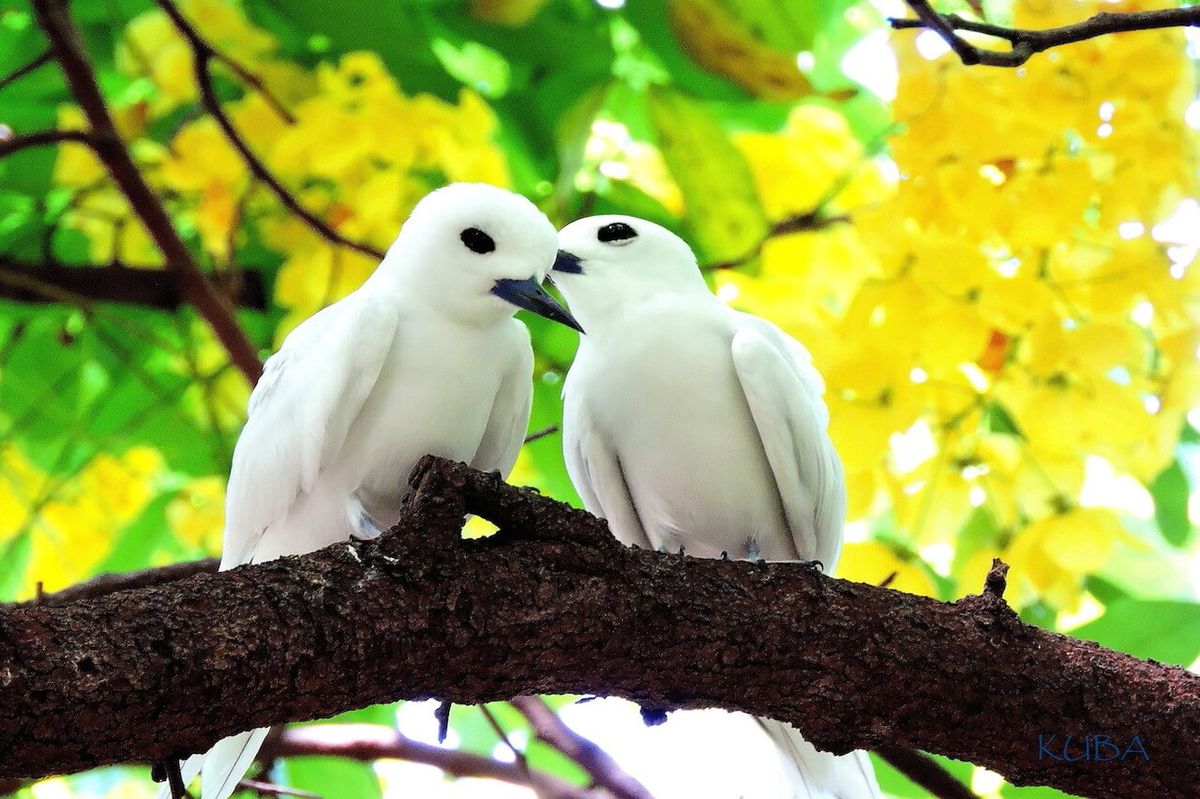
White Coral Sands
Dirty and haggard, I felt ashamed next to Ienith’s easy grace. The Herald followed us to the beach, but stopped and waited at the treeline while we walked ahead. My boots were obnoxiously heavy in the sand. “Just take them off,” she suggested, and it felt wonderful once I did. Grains and shattered shells ran up pleasurably between my toes, rubbing and scratching all at once. I began to see why the Kane went barefoot and left the boots sitting there with the machete. Who would take them, after all?
“Does your leg hurt much?” she asked, observing my limp.
“It’s not bad. Better than the crutch; that hurt my shoulder more than anything.”
“I’ve never been hurt like that. Not even a broken bone.”
“This body’s done a lot of living. Nicks and dings pile up. I’ve been lucky to keep all my parts intact.”
She nodded thoughtfully. “You said, in your story, you visited Noio Koha.”
“No, I only made it close. The Molokai kiu picked me up on the doorstep. It looked incredible, the houses on stilts.”
“There are many tall buildings. It is To’mea’s richest town. Wai kalepa bring in the cowries, buy, build. Everyone in town gets a little more. They come to need their patrons. But with more cowries come more problems. More fights, fires, stress on the Speakers to settle disputes.”
“So you’re worried what happened in Kaleikaumaka could happen in Noio Koha?”
She sighed. “Ashur, I suspect it already has. We asked for men, soldiers garrisoned there. No word. Keone…he has moved East, but his men seep into the valleys. Wai kalepa can pay them off and it’s as good as loot. The Speakers can’t do that.”
“And you wouldn’t even if you could.”
A quick nod. “Never. Keone is better for their business no matter how you see it. A ruler far away instead of close, happy to let the kalepa do their business. Things they can’t do while Speakers watch.”
“There’s never been a war, right? That’s what I heard.”
“No war, but a little blood sometimes. We’ve had problems a long time. But not always so open.”
“It’s an old story,” I said with sympathy.
“And you are the king of old stories,” she said, lightening the moment.
Southeast we strolled along the beach. Two ruins stood just off the sand: great towers once a hundred feet tall now collapsed to fifty, their stories piled up lopsided like dirty plates. Encrusted with greenery, they still showed a few grey bones. So little survived on these islands from that distant time.
Ienith saw my focus. “Houses built by the gods long ago. They dot the southern coast, and there are some in the east.”
“Where’d the gods go?” I knew the true answer but wanted to hear hers.
“The houses were for their courtiers. The richest and mightiest people in the world, congregating by the sea. When the world burned away—I am not ignorant, Ashur—they were burned with it. And the gods had no more need for houses.”
“I didn’t think you were ignorant,” I fibbed.
“But you suspected.” She grinned, the circles under her eyes melted and she was radiant. “We Kane do not like to write, so memories have short lives. Still, some creatures outlive others. Tended properly, they can live a very long time.” A wink.
“So many jokes.”
“I’m good for little else, these days.”
“What’s keeping you grounded here? Orders, I know—but for what? How could they possibly decide that’s better?”
She sucked at her teeth and waited before answering. “The harbor, you saw it.”
“I watched from the Halawa valley’s ridge. You won the battle.”
“Two thousand dead, and all their ships,” she said nodding. “It wasn’t enough. The harbor is gone.”
“But you won.”
“The Mouth of Ku disagrees,” she snapped back, curling her lip. “The harbor was something to protect.”
“How could you possibly—“
“I have been given hai’oleo,” Ienith cut me off. “More of the gift than a dozen village Speakers. But I fall short of my potential. I’m forced into choices where I should not be. To defeat Keone’s army, to safeguard my own. I could not do both, had no way to beat a force that already killed Lord Io’aulani on brute force. So I chose my men and Hunakai Harbor lies on the ocean bed.”
“They don’t care you saved the army?”
“Casualties can be counted and measured. The harbor cannot.” She shook her head and clenched her jaw.
“Then afterwards they send you for Ka’ena,” I prompted.
“My task. What should have been redemption, what High Speaker Kaweo fought to get me and I wasted. I should have gone to Kaleikaumaka myself.”
“But you didn’t know he’d lost the kalepa already,” I protested. “You can hardly blame—”
“I knew it would be difficult and I should have gone. I stayed hoping…” Ienith choked up for a moment. “Hoping another message would come, that they’d change their minds. I wanted to be ready to go if they did. The Colonel did his best and I had nobody better, but Speaker Ka’ena is dead by a foreigner’s hand. Like Hunakai, it’s the damning thing I can’t get away from.” She stopped and put her face in her hands.
Stepping closer, I reached out and put a comforting hand on the back of her arm. “I’m sure you’ll have a part to play. War’s far from over.”
After a moment she straightened and shook her head. “I have a decimated kaua and a half-troop of mercenaries. To’mea will win the war or lose it, hai’oleo will rise or fall. And Ienith Pele’iwa will not be in their mouths when the story is told. Her name never written.” That beautiful face was twisted with despair. She spat on the dark sand, whispering bitterly, “She Who Cracks the Earth.”
The poor girl had all the strength in the world and neither the conviction nor the permission to use it. As a weak man, I could only imagine the feeling. Ienith looked up with bloodshot eyes. “Look at that,” she whispered as they widened.
Ahead of us the beach’s green ribbon turned white as a cloud. Seabirds perched on the sand by the hundred and the thousand and the ten thousand. Gulls, terns and sandpipers flocked together shoulder-to-shoulder, pecking at specks in the sand, forming a single squabbling squawking raft from the water’s edge to the bowed ironwoods.
“We’re very lucky, Ashur.”
“I’ve never seen anything like it.”
“I did once, as a girl.” Ienith took the cloth from her shoulders, folded it carefully to lay it down in a brilliant puddle. She bowed at the waist, touched her toes, stretched her long legs.
“What are we doing?”
The lines on her face were gone. She looked so young then, so full of spring it broke my heart. “Birds,” she declared with a grin, “belong in the sky.” She crouched low for an instant before taking off. Legs flew beneath her; the white dress glided over green sand and nothing above her waist moved but for her pumping brown arms. I gave chase, hobbling desperately in her wake. Ienith’s bare feet kicked up a geyser of sand behind her. Sediment fell loose over tiny footprints: prim triangles gouged by the balls of her feet behind deep divots from her toes. Her heels never touched earth.
A few birds saw her coming. They warbled warnings; urgency rippled through the flock. The rest heard her screaming from a hundred feet out. It was high and loud and natural, a hoarse wail on the verge of cracking. Not hai’oleo, just the howling glory of a woman’s joy over wet sand.
Pandemonium erupted in the ranks: a chain reaction of panic across thousands of bird brains. They lifted off the ground in a single rolling wave, like white linens stripped from a bed. Ienith plunged into their mass to vanish in the storm of feathers. I came in behind and they swirled around me too, flying in addled loops. Birds buffeted my legs and shoulders. They bounced away with frustrated yelps and scrabbling talons. I slowed to walking, immersed in a sea of white feathers, barely able to breathe. Breeze and beating wings drove loose down like snow over the beach. It stuck to the sweat on my face and wouldn’t leave until I wiped it away. I turned in slow circles, looking skyward to admire the squall, imagining an ascent into Heaven. You may roll your eyes, but you never stood in the white storm. Centuries, and it’s never happened again.
Ienith emerged euphoric from the cloud, the feathers parting like stage curtains, her raven hair wild. We walked up to one another and she put out her arms, silent as a dream. They encircled my ribs while I wrapped up her shoulders. She breathed deep against my chest. A younger man’s blood would have set him on fire, but this old one enjoyed the moment. I felt time running through us both.
She pulled back and looked around us. “It’s beautiful,” I said.
“When I was young, the first time, they took off too early. I wasn’t fast enough. Like you.”
I laughed. The birds were higher now, dispersing, sorting themselves along tribal lines. “I’d never think of that. Just plowing into them.” I wiped guano off my vest with a shirt sleeve. “I’d try to keep my shirt clean.”
“E ho’a’o no I pau kuhihewa,” Ienith sighed.
“You know I didn’t get that.”
“An old saying. ‘Try it to end the panic.’ To clear your head. Come with me, we’ll get you clean,” she called, jogging towards the breakers. She took a few clumsy steps through knee-deep water before spinning on her heel and falling backwards into a wave. It passed over and through her with a slap of sound. Spray leapt in a shining fusillade and when the wave crashed into foam Ienith stood alone. She bent over, letting her hair hang to the water before whipping her head back. Hair and water crested like a koali’i helm to fall down her back in a thick black rope. It took me a minute to get my vest unlaced—can’t bring good leather into salt water—and then I waded after her. The water, chilly but pleasant after a spell, quickly dissolved the guano.
“Take your men east,” I declared to the sky, floating on my back. No weight on my bad leg, though the salt stung at first. I felt whole for the first time in days.
“It was my plan. Bring Ka’ena’s gift of flame to the Grand Speakers,” she walked up next to me, immersed to the waist. Her skirt hem floated on the surface, gossamer from soaking. “But he’s gone. It’s no good.”
“Who cares? What can they do to you? Don’t they need you?”
Her jaw set and clenched. “They do. The Speakers are strong…” she trailed off, shook her head.
“But you’re the best.”
“I am the best.” Ienith looked straight down at me.
“So like you said: E ho’ana…”
“Stop,” she cut me off, bent low with wet hair clinging to her neck. Water dripped down the bridge of her nose, swelled into a single drop and crossed the gulf to mine. “You ruin it.” Warmth in my mouth, lips brushing once before the kill. We kissed for a moment before Ienith pulled back. Her eyes flicked away from me, out to sea. “Wave,” she announced, swiftly turning her back. It crashed over my face and rolled me twice before my knees painfully skidded on packed bottom sand. I got to my feet spluttering, eyes stinging and blind. Ienith laughed not far away.
Her shawl had blown some distance to snag on a spar of driftwood. It became a headcloth securing her hair while it dried. “What do you want, Ashur?” she asked as we walked back to camp. “On To’mea, I mean. You call yourself a wanderer, but wanderers have aims. Left on your own, what would you do?”
“I’d walk east along the road. Stay to the beach when I could, turn north with the coast when I reach the sea. I’d want to see all the beaches on To’mea.” It was a good answer, not truly a lie.
“You’re too pale for the beach.” She reached out and brushed my cheek.
“I’ll make a big hat out of palm fronds.” I stretched my arms out wide to show her.
“You would do that. No style in the haole, all business. Like that ugly thing,” she said pointing to the vest dangling from my hand.
“We don’t all come from such pretty places.” If I thought about it, the coastline laid out before me and the verdant green mountains were almost painfully beautiful. Yet after a few days on the island, I barely noticed them—just part of the background.
“If you want to see the beaches,” she said in a serious tone, “you can. Everything I asked you’ve done. Your leg was hurt serving me.”
I blushed with discomfort being cast as a hero. “Thank you. And I may leave, if you’ll let me. It depends on the wound, how much I can travel.” We’d come to the camp, where the herald Kapono waited sternly. We drew stares from the troops, now all awake and working at their daily chores.
“We’ll move before long. You may ride with me when the time comes, or go alone if you choose. But I promise there’s nothing faster or safer than my ka’a kaua.”
Io had used ka’a for the water trucks—she meant the ox-drawn chariot. “I will, for now. Thank you so much.”
Ienith nodded. “I ask one more thing, Ashur: let me know when you do leave. I’d like to bid you aloha.”
“I’ll try, but I can’t promise.” She nodded at that, and patted my shoulder before returning to her quarters. The herald whispered in her ear and neither looked back.
Staves sat on the ground in the midst of the Tigers’ tents, sharpening a rapier on a smooth grey stone. The others were tidying the campsite and ordering their gear. Blue eyes lit on me. He was freshly shaved but for the mustache, his neck still pink and raw. “He jumps into the sea because it is green,” sang the Colonel. “He jumps into the sea to visit the queen! Have a good splash?” he asked sarcastically, cutting the tune short.
“It’s a lovely morning,” I chirped back.
“You’ve been to see Our Lady of Earthquakes?”
“Yeah. She wants to pick up camp and march east.”
“And you’re to give me my orders.”
I shrugged. “Just repeating what Ienith said.”
Staves sneered at the familiarity. “Then she can tell me herself. We’ll see, then, won’t we? Pack your own shit; I want you out of my tents. Errand’s run, I’m done. Though I’ve thought that before. Can’t seem to be rid of you.”
“Just trying to get by, Colonel,” I straightened to give a sloppy salute. “You’ve done so much for me. Glad to be out of your hair.”
I retrieved everything from the tent and hauled it outside. Put on a dry shirt, replaced the vest, changed my leg dressing and put everything important in Ienith’s red-on-white satchel. Activity bloomed across the camp; what remained of the High Speaker’s kaua was moving on. It would be an hour yet. I took one of the coconuts piled nearby and split it in two with the machete. Pale fluid gushed and splattered on the earth as the halves fell. Easy to clean off the blade, but I’d lost the milk. I thought of the singing man, how he’d attacked a single point on the husk so it could be drained once breached. With my back against a tree and cool tradewinds rustling through the ironwoods, I scraped white meat away from black rind with my incisors. Once finished I wiped my hands on salt-crusted trousers and walked out to where fallen brown needles met olive green sand. Putting my back against a dead stump, I produced the Friar’s book and read on the beach. The end drew nigh; only a quarter-inch of soft pages buffered the back cover.