Speaker for the Gods, week 4
The Lady Ienith
In a lengthy column the To’mean army marched from the gates of Kia’i Ku’ao. Singing, backslapping, chattering gaily in formation. The morning was warm despite our altitude and the Sun lit up the soldiers’ kapa cloth packs like white seashells. Flowers in the forest sent waves of sweet fragrance to waft like sunlit dust motes, cut with the fresh sour of trampled grass. At the clearing’s edge waited a two-wheeled chariot drawn by four muscular white oxen. Open at the back but walled to stomach height on the front and sides, the walls were painted with flaming licks of orange and red. High Speaker Ienith Pele’iwa stood at the helm along with her herald.
One of the escorting guards put his hand in my back, sending me stumbling towards the cart shining gold in the afternoon like a living fairy tale. The High Speaker saw me, beckoning with one empty hand. White leather reins hung from the other. I crossed the open ground in a hurry with the stares stinging my back like darts. Stepping carefully up a polished wooden step onto the chariot, I shifted my bags to the other shoulder and leaned some of their weight against the bulkhead. It seemed imprudent to set them down just yet, almost presumptive without an invitation. The Speaker looked amused and the herald took me in like an ugly curiosity.
“Ashur,” she turned away from me to survey her men. “I asked to borrow you from the Colonel and he was kind enough to agree. He’s returned to the Red Tigers.”
“Couldn’t have been too long an argument. He’s not fond of me.”
“Why isn’t he?” Her back still turned.
“In my experience, milady, fighters resent cowards.”
She raised her arms and touched each hand to the opposite elbow, signaling to someone out in the clearing. Shadows sprawled like lazy cats over Kia’i Ku’ao’s high façade. “The fighters you’ve met didn’t know their own interest. Nobody respects a fighter until the cowards run.” The High Speaker faced me again with a wry smile.
“Where are we off to? I’m happy to go along, just curious,” I hastened to add.
“I’m off to war. You’re off…well, that’s the wrong way to put it. I will explain what I need and you will explain who you are.”
“I’ve told you already—“
“I know what you said, but if that’s still your answer you’ll need a better one. I’ll give you some time to think about it.” Her question suggested uncomfortably intimate knowledge. I did my best to smile through the flush on my face. The Herald chuckled, holding his tongue between his teeth.
Ienith craned her neck, opened her throat and bellowed something in Kane loud enough to echo it off the fortress walls. Those assembled shouldered their weapons, making ready to move. The Speaker twitched her rein wrist to spur the oxen. Ponderous and huffing, they nonetheless built up speed through sheer inertia. We headed downhill, south, away from the sea and towards To’mea’s narrow waist. The army marched behind us, dwindling. I turned to Ienith, who was resplendent in white robes and a feather cape in To’mean colors. Thousands of little red and gold feather tufts had been stitched together so tightly they looked like one rippling sheet. Casually steering the oxen, the Speaker waited for me to speak.
Ienith had put me on the defensive and I decided to take things in a new direction—buying time, divining what she wanted to hear. I set my bags down gently on the rattling floorboards. “Why does your chariot run so far ahead of your men?”
“Because we’re much faster than they are.” She flicked her eyes back at me before they returned to the road. “We ride to meet another host. They’ll catch up by dark.” The headwind sent her long hair back in waves. Her herald was a silent statue. Jungle rolled by on either side, dense and moist with dew that refused to dry up even after a sunny day, still projecting the sweet smell of floral nectar. Birds called from everywhere, bold and cacophonous. Here and there shadows would flit in the bright spots between the trees, but that’s all I could spot of the singers. There were no beasts on the ground—no deer or wolves or rabbits or foxes in any Kane forest. No snakes either, which is rare for a jungle. Only the feral descendents of pigs and goats roamed the deep woods, uprooting native flora, crashing through the undergrowth.
“Where do we march once we meet them? East, I assume. It’s only the harbor to the south, yeah?”
“Hunakai Harbor. We go to defend it.”
“They’ll try to land there, eh?”
“That is what Ku’s Mouth has told me.”
I nodded like I understood. “When I marched to the beach, with the mercenaries, there was a hot wind at our backs. We crossed miles in minutes, it seemed to me. Was that your power? The, uhh—forgive me. I’m only starting to pick up Kane.”
“Hai’oleo,” she enunciated, carefully shaping the sounds with her cheeks and tongue. “Yes. Pele’s winds, cinder and rage, pulled from the lua pele.” She pointed to explain, out through the web of trees and across the gulf of dry land below. Her target was the dead cinder cone on the other side, Mau Pu’eo.
“That’s lua pele? I thought it had a different name.”
“Its name is Mau Pu’eo. The tallest mountain to the east, the king of his range, is Mauna ’Ele. All are lua pele, mountains that breathe fire.”
Now I understood. “Aren’t they dead? Sleeping, I mean, for now?”
“The breath of Ku will never die.”
She could certainly turn a phrase. “Do all the Speakers know English”
“There was a school where I was a girl, founded by haoles generations back. They’re tolerated. Harmless. And the tongue is useful in times of war, when foreigners seeking blood or loot land on To’mea’s shores. Even our most hidebound leaders recognize that much.”
“Where is your village, if asking isn’t impertinent?”
“On the windward coast. South and then far east. Village Speakers will seek children with hai’oleo, train them. Measure their strength.”
“I bet you measured up well.”
“I blew the Speaker’s grass hut off the foundation. He made my father re-build it. Ka was furious, but he knew couldn’t strap me.” She showed a triumphant grin.
“It was a church across the sea, where I grew up,” I volunteered. “It started as a church, very remote. People settled there until it was really a village.”
“Your parents?”
“Never met my father and my mother took holy orders, so the priests made me a ward. Lots of kids didn’t really know their parents, there were dozens of us who just lived at the school. Safe and fed, lucky, really. It was a decent place to grow up and the mountains were beautiful. Covered in snow in the winter, green forest year-round.”
“Ka told me never to trust a mountain man,” she said stretching out her rein arm with, pulling the oxen inside along a sharp muddy turn. “Every time he’d trade his fish to the water truckers, he’d curse them leaving and curse them returning but never to their faces. Some men did; the truckers would laugh and trade all the same. Ka said his deals were always better. ‘Pride and pennies,’ he said. ‘Drops in the same bucket.’”
“Do you believe that?”
“I believe in hai’oleo. The power it puts in my hands. The freedom it affords my people.”
“You’re a High Speaker? So you rule a town, or a region?”
“Pursuits for the less talented. No. I am a warrior.”
“You command the army.”
“I command mine. There are others—more numerous if you think that’s better.”
“I’ve found it takes a rare force to counter the weight of numbers.”
“On To’mea you’ll find forces hard to measure.” The falling winding road became a level straightaway. Ienith thrashed the reins, the oxen lowered their heads and the chariot picked up speed. We were a hundred feet above the dry plain, the trees thinning around us to let in bright sunlight.
“My Lady, if I may be direct,” I began, “I’d ask what inspired you to take me from the beach. I’m just a simple man, playing at soldier to make his way. Surely Colonel Staves has men who’d serve you better.”
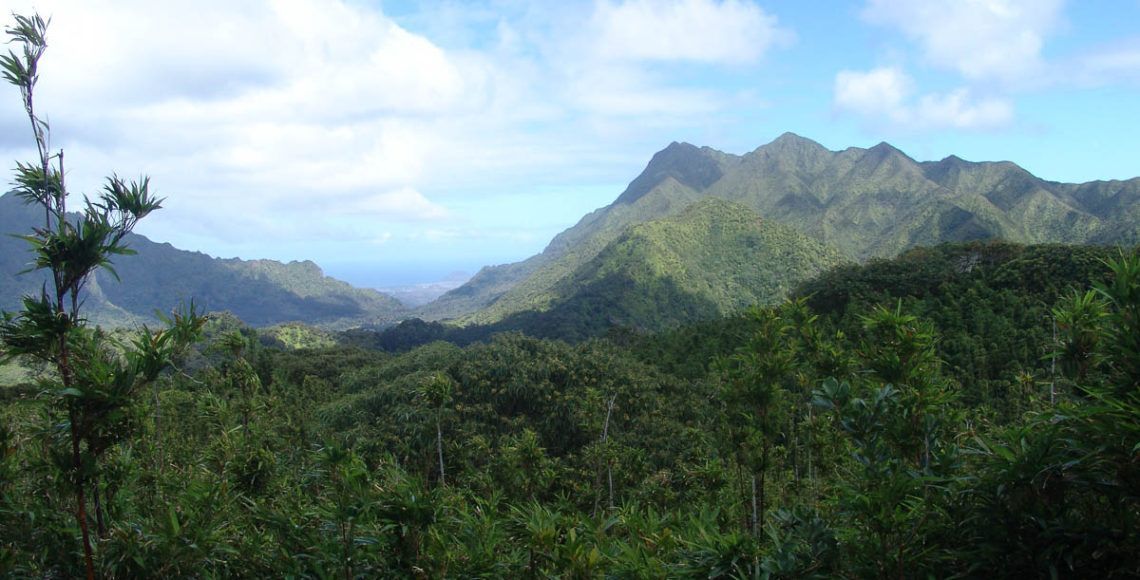
She sucked at a tooth. It was the first time I’d seen her take time to consider a reply. Nervous, I glanced at the herald. Like any good servant he appeared to studiously ignore our conversation. It was an odd feeling for this scruffy vagrant. Ferns and old growth had given way to chest-high brush and scrubby young trees. It was much drier, the soil red and growing gravelly. We emerged from a shallow gully chiseled into basalt by some long-dead stream, looking up to see vertical faces crashing down on us. Slow white waterfalls drooled from high-up fissures; the water fed stands of audacious trees jutting sideways from the slopes. Clouds drifted ponderously between craggy peaks to the east, but here on To’mea’s waist the sky was clear and blue and raging hot.
Ienith spoke at last. “I saw you during the battle. Fighting—or rather, not fighting.” My cheeks began to burn. “You were so far away but still I saw you. It’s hard to describe, but to me, people—they look the same. All of them. Just brown and black and white, no faces, no forms. Just smudges in paint. Of course I can see their features, I’m not blind. But there’s a cloud over them. Somehow they’re faded.”
She focused her gaze like it was crucial I understand. “Smudges in paint,” she continued, “and in all those smudges I saw you. You, Ashur, were not a smudge. It was distant, it was dark, and I could not see your face. But I saw your form, revealed where all others’ were hazy. Only yours.”
“I’m sorry, my Lady, I can’t think to respond. I would like to understand, but this is so far beyond me—“
“It is not.” She nearly hissed it. “Be direct, you said. You have not been direct. You’ve said you’re a simple traveler but my eyes tell me different. You tell me different, though you try to hide it.”
“What are you asking?” I put my hands up in a gesture of peace. “It sounds like you’ve got a pretty clear idea, so why don’t you just tell me?”
A long exhalation. She pondered. “You were clear to me when you should not have been. And you fought in a way men do not fight. Not mercenaries.”
“I’ve no talent for swordplay, my Lady. If you name me a coward, I’ll kneel to accept it.”
“Not a coward. A pretender. We have a phrase to describe you: ‘Ekahi manu noho ‘ae kai. ‘The bird who stays by the water’s edge.’ You are unwilling to lose your life, and not in the way other men are. I say unwilling because it wasn’t fear. You were protecting something valuable. And I know enough of the unseen world to perceive it.”
Her accusation was correct. I had lied in describing myself, by omission at the least. Yet I wasn’t sure how to describe the truth. I said only what I knew: “I have lived a very long life, much longer than you’d think looking at me.” She arched a single eyebrow while the other stayed frozen. “And I expect to live a long while yet.”
Ienith nodded, took it in. “And if I were to have you hurled from this cart?”
“Please don’t!” I exclaimed quickly enough to set the herald laughing. “I might age well, but I’ve got the same skin and bones as anyone.” I hiked up my right sleeve to show the long scar down my forearm. “The bone went right through the skin when it broke. Took the surgeon three tries to set it right. I was lucky not to lose the arm.”
“You’re no god, then.”
“Hah!” I chortled. “We’ve all got talents. Yours are worlds beyond mine; power I couldn’t imagine.”
“They say power can be a curse.”
“Persistence, too, I’ve heard it said.”
She giggled. “Persistence. Most would call it immortality.”
“I chose the word carefully. Folks get jealous when they shouldn’t. What good does it do me, of a day? You’ll never see Time on the battlefield, only men.” Ienith looked unsatisfied. “I’m certain I can die, but obviously it’s never happened yet and—age aside—there’s no reason it should’ve. I’ve been hurt many times but nothing grave. Had terrible fevers but broke them. As far as I can tell, I’m a mortal man. To say anything else invites testing the proposition.”
She laughed, light and feathery. Wind cracked her hair like black whiptails. “Ashur, you aren’t as interesting as I’d hoped. But less boring than I feared.”
“I rarely exceed expectations. If you don’t mind, your herald mentioned your last name—Pele. Is that a family name?”
She straightened her robed shoulders. “Pele’iwa. A name given on my anointment as High Speaker. Pele, the goddess of fire. Iwa, the frigatebird with its great red throat.”
“Do you like the name?”
“It’s not for me to like. It’s a given gift, like hai’oleo.” Her formal answer was disappointingly cold, delivered straight ahead to the road. She must have realized it, because she quickly followed, “When I stuck my fingers in the poi, my Ka and Wa would call me ‘iwa.’ It has another meaning the Speakerage did not intend.”
“What’s that?”
There was a sparkle in her eyes, and they trained on mine. “Thief.”
The chariot churned up clouds of red volcanic dust as we rolled south skirting the foothills’ toes. Dark shapes and red banners blotted the plain before us: the To’mean army, arrayed for war. A plume of white smoke rose from the distant south, along the coast.
“That’s the port, yes?” I pointed.
“Hunakai harbor, overrun.” She shook her head slowly, disbelief in her voice. “This was not the plan. We were to defend the port, not re-take it once fallen.” There were ships massed in the sea, but between the smoke and distance I couldn’t make out their sail colors.
The herald spoke in Kane. Like his English, it was stilted like his mouth wasn’t sure of the shapes it made. Ienith responded, fast and low, chewing on her lip.
“There must have been a Speaker at the harbor,” I ventured.
“Lopaka Io’aulani. Hunakai could not have fallen while he lived.” Another shake of her head.
“Ienith, I feel I should ask again: why have you brought me here? What do you want from me?”
She pondered before answering. “Your task…will not quite be what I imagined.” Another pause. “You were to be released onto the Eastern road, and sent along towards the mountain villages. To ask questions for me—you have a gift for questions, Ashur.” She gave the smallest grim smile.
“I’m to ask what, exactly? And who from?”
“Remember me saying I’d never trust a mountain man?”
“Yeah.”
“I meant to release you onto the eastern road, to venture into the mountains and see what they said up there. Whether the wai kalepa remain loyal.”
“Water sellers,” intoned the herald. I was surprised to hear him speak, but Ienith didn’t react.
“You’re worried about a fifth column,” I said, wondering about this stern silent man. “Or even open rebellion. Are things really so strained?”
“It’s a question of trust, like I said,” she said, chewing on her lip again. “If Keone’s already landed, the battle lines have changed. I wanted to send you up to the Kuamo’o hills miles east, but we have to drop you now into the Ho’o’aui. Keone will have quickly pushed east after landfall, with the bulk of his host. By taking the high villages, he can split To’mea in two and cut the water lines to the windward side. Even if we won in the field, he could fight for months from the mountains.”
“How did Keone overcome the High Speaker at the port?”
“I don’t know. Numbers, strategy, treachery. You’ve seen his hosts—the fleet in the sea was one finger on a mighty hand. He is tremendously strong; I am not surprised he’d win a battle. But he has not met me, nor felt the Speakers’ full fury. On To’mea, all invaders end the same: gnashed between Ku’s teeth.”
“So you’re leaving me here?” I surveyed the foothills crawling by to our left, dry and brushy as the island’s whole leeward side.
“You will hike away from battle, as I know you prefer—up into the Ho’o’aui mountains, just to our east. I’ll drop you at the base of a trail. The trail will lead you to a ridge and from there up to the villages beyond.”
“And I should just ask strangers about their loyalty? Can’t imagine they’d like that.”
“Your white skin marks you. They’ll take you for the traveler you claim to be. It’s unlikely they will harm you. As for gathering their answers, you’re a smart fellow. I trust your resources, your natural tact.”
“I can understand scraps of Kane but no more.”
“Kapono can’t hear and he manages to make his way,” she said nodding towards the herald.
“He’s deaf?” I felt suddenly guilty.
The herald clicked his tongue and snapped his fingers by each ear before giving a grin. “Ku makes many demands,” Ienith explained. “Those not built for hai’oleo find their bodies…taxed by it.”
I nodded. It seemed the moment to try and strike a deal: “If I can serve the Speakerage and the god Ku as payment for your generosity, the food and lodging and the trust…I’d be honored, my Lady. I know you said ‘Ienith’ but it didn’t feel right there.” She smiled warmly and my heart jumped. It shouldn’t have, and silently I admonished myself.
“You will be my eyes in the mountains, Ashur. See how the battle fares, whether Keone’s men have pushed far uphill, how the villages are resisting. If they can resist at all. The local Speakers may find themselves…” she searched for a word. “Surrounded.” The chariot ground to a halt, the heaving oxen grateful for any respite in the dusty heat. The herald produced a white kapa satchel from the shadows behind his tree-trunk legs and thrust it into my hands with a grim look. It was heavy, sloshing with full water skins, and the handle of some weapon jutted from under the cover flap. A red bird was painted on its outward face—Iwa. I threw it over my right shoulder, lifted my two duffels on the left and swiveled myself off the chariot. If I’d be hiking up mountains, much of their contents would have to go. These were just things, after all.
One last question for Ienith: “How will I relay what I learn?” There were so many yet to ask.
“If you survive, I will find you or you’ll find me. To’mea is not so large a place and we’re two clever people.”
“Thank you for the trust, Ienith Pele’iwa. And Kapono.” He returned my nod.
“I like you, traveler. You remind me of the albatross, the lonesome ku’apu. Keep your wings spread wide and your head low against the driving wind.”
“I know that’s a metaphor, but I don’t understand it.”
“At the last new moon, a voice spoke through symbols. I asked you about it at Kia’i Ku’ao, about your squall at sea, though at the time I hid my purpose. Prophecies rarely speak so directly. ‘The immortal is coming,’ it said, ‘and with him comes a storm.’”
I could do nothing but shrug helplessly before these foreign gods. “Stay true to your task, friend Ashur, and always remember,” she tapped a fingertip below one fierce eye. “You’re clear to me.” A crack of the reins sent the oxen into groaning motion and the chariot rumbled off . I watched it fade, shielding my eyes from the raging red sunset. The High Speaker charged south towards the harbor, the sea and thousands of men who wouldn’t see the next dawn.