Speaker for the Gods, week 7
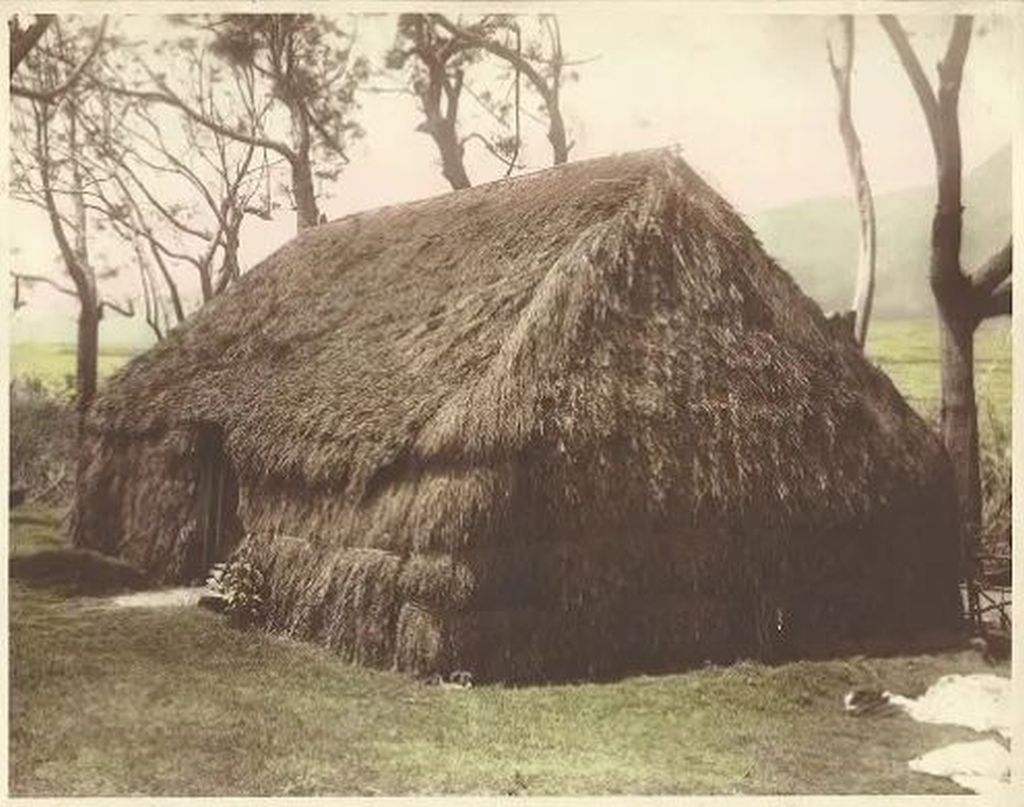
A Welcome in Kaleikaumaka
Those fever dreams were harrowing journeys, scattered and filled with nameless needs. I had somewhere to go, someone to meet or something to retrieve. Always I was distracted, immersed in something else that should have taken just moments but stretched into hours. The crucial moments never arrived and I was lucid enough even through the fever to know they never would—but still fear gnawed at my stomach. I was always letting somebody down, barely able to hear their harangues over klaxons wailing, You’re going to be late. Everything will fall apart! When the tide of anxiety overwhelmed me I’d wake with a panicked start, half my brain still mired in the shadow world. Shuddering from fever and disoriented, I saw ghosts between the grey spires of trees. Piero lectured me and my mother wished out loud I were dead. The night crawled by, served like a jail sentence with no tally of the days.
I must have slept a good spell because suddenly I woke lucid to see morning light. Dogs barked somewhere distant. The fog was gone, replaced by blue skies above a canopy drifting with the languid breeze. A warm Sun had already cleared the horizon. Though glad to feel as hale as I did, the dogs were a worry. To’means did not suffer feral cats or dogs, so any heard barking this deep in the forest had to be attached to human beings.
As the hour wore on their yelping grew louder. I couldn’t imagine walking with my boar-gored leg, nor could I expect anything with eyes to miss the obvious and bloody evidence I’d leave if I tried to drag myself off the trail. Nothing to do but sit and wait, then. I tucked the machete under my good leg as the barking approached from up the trail.
When the hounds came into view, I nearly laughed. For all their carrying on, they couldn’t be more than forty pounds each. Four sets of tawny coats, big pointed ears, and long hook-shaped tails; according to the Friar, the Kane called them ilio. Bred as companions and shepherds, they were fast and friendly with short legs and toothy grins. They rushed directly for the pig’s carcass some fifty feet away, crying in high voices and wagging their tails so hard they could barely walk straight. One noticed me after a moment and his fellows spun their heads in kind. The pack kept barking, fanning out to guard the pig until their masters arrived. I didn’t have to wait long for a pair of Kane men to traipse into view: both somewhat past middle age, one short and round while the other was much larger. They carried spears in their hands like walking sticks and wore simple kapa waistwraps. Bare feet, necklaces of blackened kukuinuts and patchy beards of long white whiskers rounded out the exotic image. The bigger man had a thick pattern of tattoos across this shoulders, chest and neck. He took the lead and addressed me in Kane.
I wasn’t totally helpless with the language. Built from only a few core sounds and lacking a huge lexicon, the very basics came easily. Talking was hard, but listening I could manage. The man asked my name and hale, or home town; I touched my chest and stated “Ashur.” He asked my origins again with a challenging tone. I mimed rolling waves with one hand, the other pointing a thousand leagues east.
“English?” I suggested. “You speak English?” They frowned and conversed among themselves, too quick and quiet for my ears. Whining dogs snuffled at the dead pig, slavering and impatient until the smaller man hissed them away and mimed a kick. The larger set his spear against the tree trunk and reached out a meaty paw like I was supposed to take it. I reached out with my right hand, felt a strong grip, and rose up using only my good leg. He came around to my left side to support the bad one while I bent down and hoisted the satchel around my free shoulder. The big man bellowed something about pua’a and ilio, pig and dog. His companion set the dogs loose with a whistle and they leapt on the carcass, yelping with glee. We limped up the trail on five legs, a man on each side holding me up.
Pain raged in my leg with every jostling step up the trail, growing worse as the hike progressed. I felt wetness and heat near the wound but there was no sense in stopping. We rounded one last bend in the trail and a village came into view behind stands of greenery. Plots had been cleared in the heavy growth, though the jungle constantly fought to reclaim them. Huts squatted on some; others were cultivated strips of yams and bananas. Paths ran between the cleared spaces, the most-traveled stripped to dirt while brave blades of grass grew in the smallest. Crude footbridges stood over clear bubbling streams, ignored by children daring each other to hop across. There were two levels to the village: the lower tier I saw before me, and a smaller bluff of level ground standing forty feet above the rest. A fence of dark wooden stakes perched atop the cliff, obscuring my view and suggesting some wealthy residents. The upper stories of large wooden buildings poked above.
Folks were hard at work in the farms we walked through: women picking bananas, rope-muscled men digging trenches for new taro ponds. Helmed soldiers wandered the periphery; news of the invasion must have reached traveled fast. I wanted to ask the place’s name but there wasn’t a drop of moisture in my mouth with which to speak. Children crowded around, eager to see the white man swinging bloody between two of their own. Their parents stared silently but kept up their work. I was led through the village with an ever-growing crowd of chattering whelps at my back.
We wound our way up to the village’s second level, an elevated terrace of dirt and lava rock graded level and backed up against a mountainside so steep the greenery grew sideways. The village was nestled into the back of the narrow valley I’d surveyed while Keone’s army marched below. A low ridge shielded this shallow basin from the south, so I’d missed it earlier. The north wall was three hundred sheer feet of black sheet rock, cracked down the middle like a mirror by seismic forces. Water seeped from fissures in the rocks to form a kind of slow trickling waterfall three hundred feet high, the stone polished so marble-smooth by runoff that not even moss could take root. The fissures’ collective product massed into a deep pool on the village’s lower level. Three separate streams flowed from the pool into the lower stratum, where they formed a small delta supplying the local farmers to use. By the pool, dozens of two-wheeled water trucks stood idle alongside a mountain of empty gourds. Loaded trucks stood ready but idle by the path. It was gratifying to see the Friar’s accounts made real. We approached the stockade I’d seen earlier, and my gut clenched to see the severed heads on display.
They perched on narrow posts in various states of decay, mouths agape. All were Kane, or had been, and birds had long since taken their eyes. The men supporting me hustled through the gate, heads down and faces drawn, fearful rather than proud. We entered a courtyard of well-appointed wooden buildings on black stone foundations. White chalk markings covered one small house with a sharp steepled roof, and noting similarities to the symbols in Ienith’s fortress chambers I surmised this hut was the local Speaker’s. Armed men stood guard by the door, looking skittish, turning spears in their hands. At the sight of us they approached and hailed, prompting my smaller companion to unhand my shoulder and head them off. I winced at the sudden shift of weight to my bad leg. The big man propelled me onward as his friend spread his hands in peace. I felt I should mention my mission from Ienith but couldn’t speak enough Kane in my parched and weary state. Cold fingers of fever snaked through my frame once again and all I wanted was somewhere to lie down.
The hunting dogs gathered before the largest structure, where an old woman and young man fed them bits of dried fish. She was immense, three hundred pounds with a long grey braid down her back and a knee-length dress suspended from her pendulous breasts. The man was about my height with a happy roundness to his frame, clad in a yellow waistwrap. Seeing what the hunters brought home, they dropped the rest of the bloody hunks and rushed to assist. Three Kane helped me inside, lifting me off my feet and filling the well-appointed home with anxious chatter.
The interior immediately familiar from the Friar’s description of To’mean homes—the sort built by wealthy watermongers in the mountain towns. Dark lumber everywhere, heavy wall supports reaching up to the lighter roof beams and everything jointed expertly together with cordage instead of iron nails. It was all one large circular space with bedrooms marked off by partitioned walls—goat skins stretched across wooden frames. A black stone stove anchored the foundation, emptying its smoke out the high roof through a well-built chimney. Afternoon Sun shone through open portals in the south wall, white kapa curtains tied back to let in the beautiful day.
The air was thick with pork: sugar, fat and charcoal braided themselves up into a smell so intensely textured it became a taste. Woven mats of dry grass covered the floor; there was little furniture except for a handful of simple wooden chairs around a dark heavy table. The To’means led set two brown wool blankets on the mats before laying me down near the far wall. My leg throbbed and the region felt very warm; the wet dressing drizzled half-congealed black fluid down my knee. I wanted nothing more than sleep, but the wound had to be cleaned and dressed. Left on their own, my hosts might just change the bandages and leave the filthy wadding inside my wound overnight. The fourth Kane—the small old man—walked through the front door and there was palpable relief amongst them that the soldiers hadn’t come along.
Everyone spoke all at once, and it sounded like an argument. I could barely make out anything in the chaos, but three words I heard repeated: haole—white man. Kaleolani—Speaker. Keone—the invader. Nobody had addressed me, so I spoke up for attention.
“Keone!” I sat halfway up to get their attention. They stopped abruptly and stared at me. “Keone is coming!” I managed crudely in Kane while pointing out the windows and down the valley. The woman started in on the tattooed man, who shushed her with a quick phrase. Clearly the elderly giant was in charge—this was his house. He spoke to the young man and crossed his arms, inclining his head towards me. The young man shrugged and bent his knee to bring our faces closer.
“You got where you are, brother?” I gaped at his English, comfortable if heavily accented. The other three To’means wore curious looks, so I figured this lad was the only one to speak it.
I shook my head. “No. I was just traveling up the trail. I didn’t know where it led.” The young man translated for his family. I heard my thoughts repeated through his mouth, and pinned a few more Kane words to their translations. The structures were straightforward, as I guessed they had to be—unwritten rules have to stay simple. My interlocutor turned back, a smile birthing dimples in his cheeks.
“Kaleikaumaka’s the town, top of the Halawa Valley. You’re the guest of Ioane,” he pointed to the tattooed older man, deploying each vowel as its own syllable. “That’s my ka. You heard of the wai kalepa?”
“Water sellers.”
“That’s what built this house. My ka, his ka, selling wai to the kahakai. The coast,” he corrected himself for my benefit. “Wai built all of this: the valley, the town and the hale.” He cocked his head, very earnest, and I nodded understanding. It was cold and the creeping fever had my face feeling puffy and numb.
“I’m Iokepa,” he continued, and pointed around the room. “My ka Ioane, uncle Hiapo, auntie Hina.” They offered awkward alohas, still unsure what to do with me.
“Bandages, please,” I pronounced carefully, pointed to my leg. Aunt Hina produced a black glass paring knife and cut away the kapa cloth. She made a low noise and sucked at her teeth. The men peered down at the wound.
“That’s one puka, brother!” Iokepa cackled and slapped my shoulder a bit too hard. The old men described the boar to Hina with excited, colorful gestures. She smiled grimly and began to pick out the wadding while I whined softly. Her fat hand patted my thigh trying to soothe, and when the wadding was out she leaned in to sniff at it.
“Ma’ema’e,” Hina announced with a broad gapped smile. I assumed the news was good: no rot in the wound. But the word sounded familiar even without knowing the tongue.
“Ka says you got the pua’a, stone dead.”
“I was lucky. He was already bleeding, from the ilio. I didn’t think there were feral beasts on To’mea.”
“Way out there in the forest, yeah. Far from the ho’oma'ema’e.”
I recognized the long, strange word from my book—the Speakers’ purging ritual—and connected it with what Hina said. If one meant purge, the shorter “ma’ema’e” was simply the condition of being clean. I had established my first tentative grasp on Kane’s modular nature.
It seemed Iokepa read my mind. “You speak Kane? How long you been on the island?”
I thought of lying but couldn’t see how it would help. “Three days,” I held up fingers. “What’s ‘three’ in Kane? I’m a total novice.”
“Kolu. You’re doing real good, honest. Most foreigners quit learning when they find one other person speaks their tongue.”
“White folks can’t be too common here.”
“On the other islands, plenty more foreigners. Especially those from the far west. Ka sent me for school, ten years.”
So that’s how he knew English. I counted myself lucky to meet someone educated all the way up here. “This seems like a bad time to visit,” I ventured, gritting my teeth while Hina washed the wound in cold water. The old men retreated to the table, conversing in low tones. Hiapo got a bowl of steaming shredded pork from a wooden counter near the stove, took it to Ioane and sat to eat and talk with him.
“That’s how it goes in this life, friend,” Iokepa shrugged.
“Why send you away to begin with? Is there no school in Kaleikaumaka, or at least on To’mea?”
“Nah,” Iokepa shook his head. “Speaker Ka’ena would never allow it. On the island there are a few, one village here and there, but ka made the decision.”
“Local Speaker isn’t an enlightened sort?”
“Nah, he’s real old. But sharp too, and fierce. Used to be a High Speaker, all those years back. Uncle Hiapo said he won a war by himself.”
“So what’s he doing here? Born local, retired local?”
“He’s one of ours, yeah. And a hard man, for sure. We stay on his good side, but that’s gotten harder with the war. Ka’ena’s looking for enemies where they aren’t.”
“I can imagine. The heads outside the gate are local people? Villagers?”
“That’s the case, my friend.”
“Shit.”
“If the war lasts too long, won’t be much of Kaleikaumaka left for the army to defend. Ka’ena might kill us before Keone gets a chance. He’d kill you right now just for being ‘aina haole, on sight, but Uncle told the guards you’d probably die by morning.” Hina had finished cleaning my wound and stood to retrieve kapa dressings from a goatskin bag.
“That’s going to be awkward when I pull through. Your aunt’s very thorough,” I winced as she re-packed the wound.
“That’s what they’re talking about,” Iokepa said, nodding at the table conference.
“If you can fix me up with crutches I’ll make my way east. I’m headed to Noio Koha on business for the High Speaker Ienith Pele’iwa. You know her?” Iokepa shook his head.
“Well, all the same, I don’t want to be a hazard. Your family shouldn’t risk their lives on my account.”
“Knew a white man doesn’t come up to Kaleikaumaka without a reason,” he grinned and clapped my shoulder again. “Ka’s gonna talk to you tonight, when you get some rest. He’ll make make a plan, and we’ll fix everything up nice and tidy. Trust me, ka knows what to do.”
“Sounds good. I’m sorry for everything, for being a bother.” Hina was finishing her work, wrapping up my leg with ruthlessly efficient strokes of the bandage roll, and I gave her a heartfelt mahalo. She stood and patted my head, motherly.
“You’re gonna pull through, brother Ashur,” Ioane assured me. Hina left and returned with a bowl of poi, which I gently waved away. Fermented roots weren’t going to stay down and frankly food was the furthest thing from my mind; I felt sick and only wanted to sleep. She left me alone as the family took to eating amidst low conversation. I turned away from the glaring windows, pulled one of the wool blankets over myself and curled up to hoard warmth against the fever.